Overview
What you will find in the casestudy
Secondary Research
Persona, Empathy map, CJM’s
Competitive Analysis
Primary Research
Concept
Business Model
USPs
Task Flow
Information Architecture
Style Guide
Wireframes
Visual Design
Usability Testing
Tools
Figma & Google Form
Project Duration
7 weeks
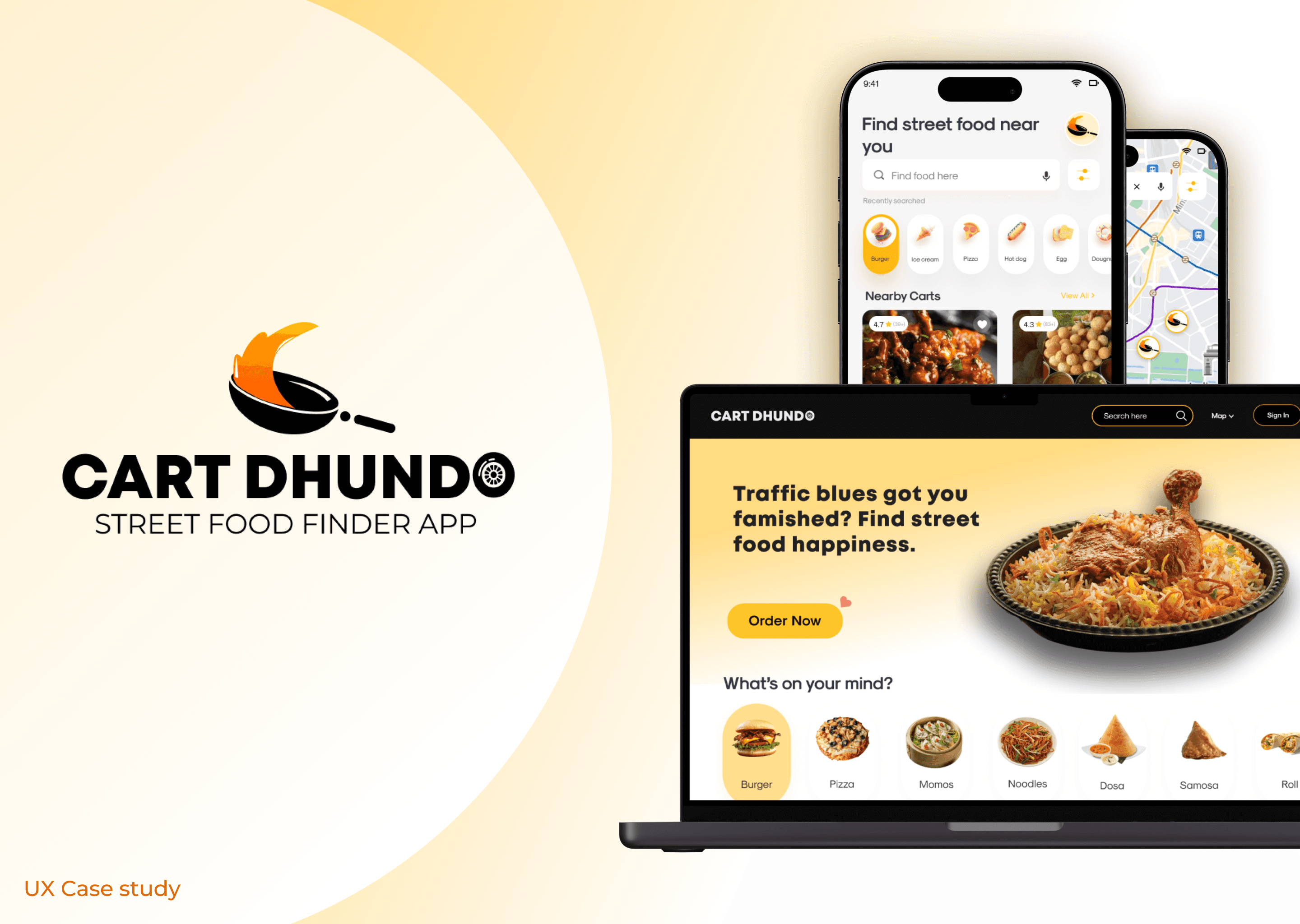
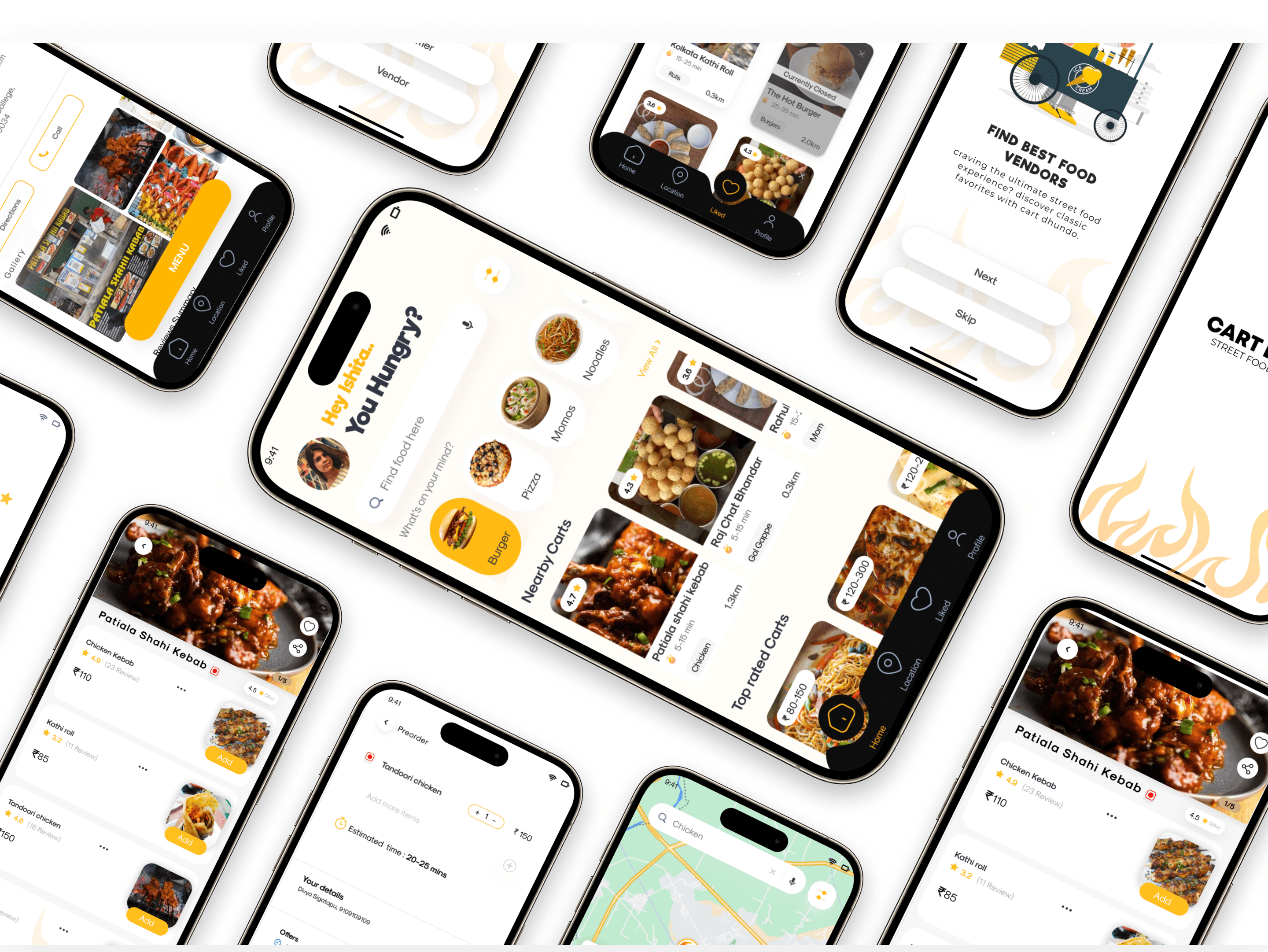
Cart Dhundo is a user-friendly mobile application designed to enhance your street food experience by connecting you with your favorite local street food vendors and simplifying the process of ordering and takeaways. Whether you're craving mouthwatering chaat, piping hot samosas, or delectable kebabs, Cart Dhundo empowers you to discover, locate, and enjoy these delicious treats from your favorite street vendors.
DEsign process
I challenged myself to design this project using 6D-methodology, it stands for Discover, Define, Design, Develop, Deploy and Drive

Discover
DEFINE
dREAM
DESIGN
DEVELOP
DELIVER
Scope
Stakeholder interview
Research
Design Strategy Space
Design Solution Space
Design Delivery Space
Persona
Scenario
Information Architecture
Style guide
Paper prototype
Valiadate
Implement
Deploy
Usability Testing
Wireframe
Visual Design
Domain-Food market
In this phase I proposed three scopes for my project related to food market, out of which one final scope was chosen and hence, designed this case study on the same .
A Food Delivery App for Health-Conscious Consumers
An All-In-One Food Ordering App for Large Groups and Events
Street Food Discovery and Takeaway App
Why Cart dhundo?
Because no other app lets you find street food vendors near you
Cart dhundo helps you not only in finding diverse types of food carts but also helps you to takeaway the food and save time.
A Food Delivery App for Health-Conscious Consumers
Health-conscious individuals who prioritize nutrition and dietary preferences in their food choices.
Personalized meal recommendations based on dietary restrictions and nutritional goals.
Integration with fitness tracking apps to help users make informed food choices.
A wide selection of healthy meal options from local restaurants.
Health-conscious users have difficulty finding and ordering nutritious meal options from local restaurants due to a lack of personalized recommendations
The project was unfeasible at the time due to the complexity of developing an algorithm capable of accurately analyzing the nutritional content of dishes from a wide variety of local restaurants. Additionally, sourcing and updating nutritional data for all menu items proved to be a significant challenge.
Concept
Target group
Key features
Problem Statement
Why this idea was not taken forward
Discover
Scope-1
Scope-3
Scope-2
Scope-2

An All-In-One Food Ordering App for Large Groups and Events
Event planners, office administrators, and individuals organizing large gatherings who need to order food for a sizable group of people.
Bulk food ordering capabilities, allowing users to order for a large number of people.
Integration with event planning tools and calendars.
Vendor ratings and reviews tailored for group orders.
Event planners and organizers struggle to efficiently order food for large groups, resulting in confusion and delays
The project faced challenges in terms of managing the logistics of coordinating orders with multiple vendors for large groups. This idea was not taken forward because of the logistical complexities involved in coordinating orders for different vendors and managing real-time updates.
Concept
Target group
Key features
Problem Statement
Why this idea was not taken forward
Scope-1
Scope-2
Scope-3

Scope-1
Scope-2
Scope-3
Street Food finder and Takeaway App
Local Foodies: People seeking the best street food in their city.
Tourists: Travelers looking to explore local culinary delights.
Busy Urban Dwellers: Individuals who prefer the convenience of ordering and picking up street food.
Food Truck Enthusiasts: Those interested in discovering and trying food trucks in their area.
Vendor Locator: The app uses GPS technology to display the real-time locations of street food vendors on a map, making it easy for users to find them.
Vendor Profiles: Each vendor has a detailed profile showcasing their specialties, operating hours, user ratings, and customer reviews, allowing users to make informed decisions.
Menu Previews: Users can browse vendor menus with photos, descriptions, and prices to decide what to order.
Order and Takeaway: The app simplifies the ordering process. Users can place orders for their desired items and select the "takeaway" option, with estimated pickup times provided.
User Ratings and Reviews: Informed decision-making is supported by user-generated ratings and reviews. Users can also leave feedback to help others discover great street food.
This app addresses the need for a comprehensive solution to enhance the street food discovery and ordering experience. By providing real-time vendor location information, detailed vendor profiles, and an efficient ordering system with takeaway options, it offers convenience and a higher level of service to users.
Concept
Target group
Key features
Need for this solution

SECONDARY RESEARCH
COMPETITIVE ANALYSIS
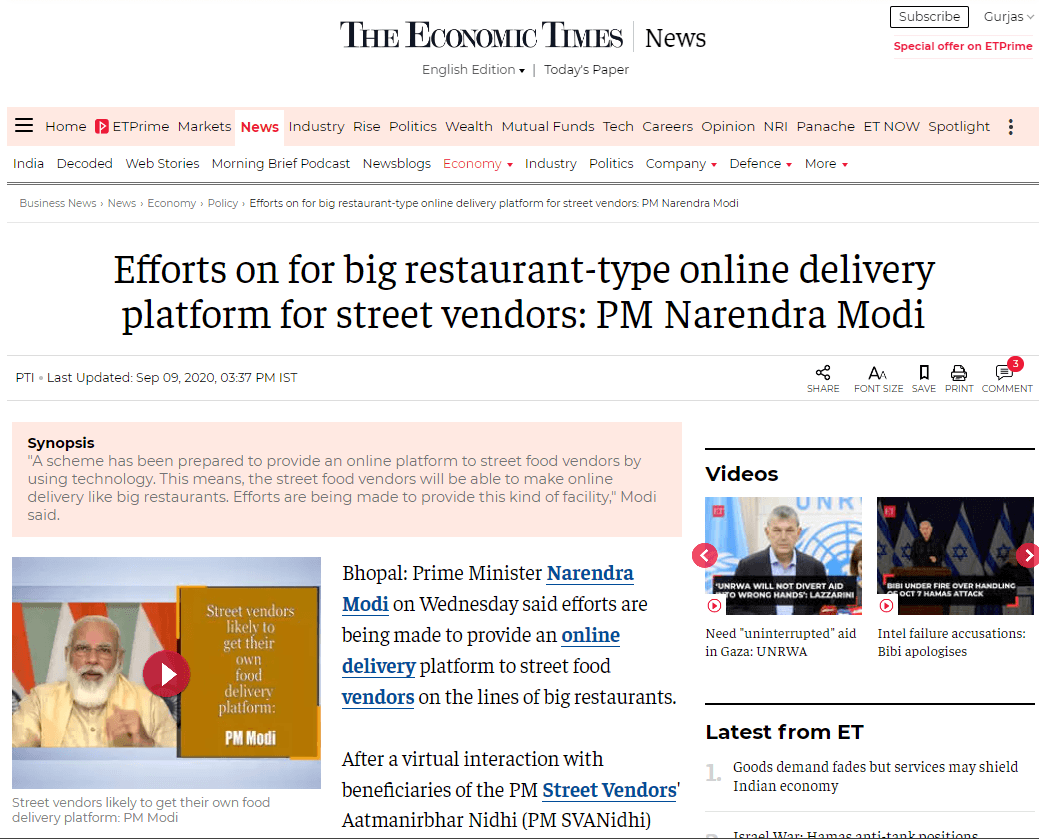
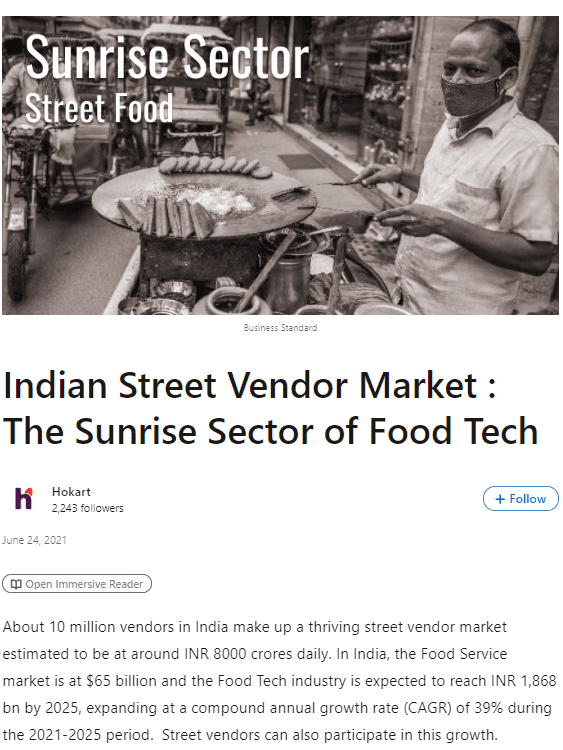
Street vending is an important and integral part of India's informal economy. It provides livelihoods for millions of people and offers affordable goods and services to a diverse urban population. Understanding the street vending landscape in India can be crucial for developing an app that caters to the needs of both vendors and consumers.
Number of Street Vendors:
According to the National Association of Street Vendors of India (NASVI), there are over 10 million street vendors in India.
Informal Sector:
Street vending is part of the informal sector in India, which often lacks job security and benefits. Street vendors are typically self-employed or work in family-based businesses.
Legal Framework:
The Street Vendors (Protection of Livelihood and Regulation of Street Vending) Act, 2014, provides a legal framework for regulating street vending in India. This act aims to protect the rights of street vendors and ensure their livelihood.
Challenges Faced by Street Vendors:
they face various challenges, including harassment by law enforcement, lack of access to credit, limited storage facilities, and seasonal variations in business.
Diversity of Goods and Services:
vendors in India offer a wide range of products and services, including food, clothing, accessories, electronics, and more.
Urbanization:
The rapid urbanization of India has led to an increase in the demand for street vendors as they provide affordable goods and services to urban populations.
Technology Adoption:
Many street vendors in India have started using digital payment methods and online delivery platforms to expand their customer base and reach.
Consumer Trends:
Indian consumers often prefer to buy from street vendors due to the affordability and convenience they offer. Understanding consumer preferences can help.
Government Initiatives:
The Indian government has initiated various schemes and programs to support street vendors, such as the PM SVANidhi (Prime Minister Street Vendor's AtmaNirbhar Nidhi) scheme.
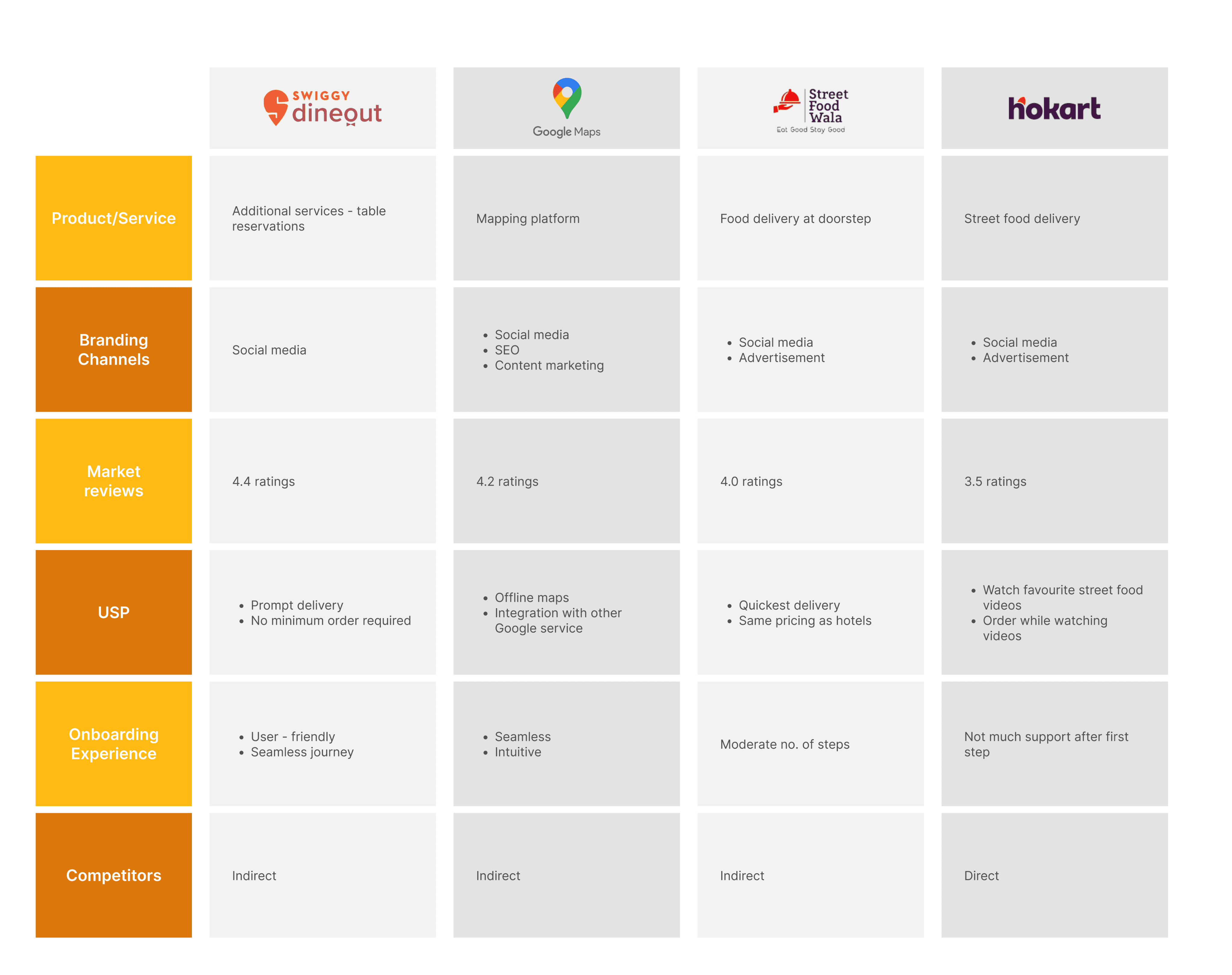
Competitors
Primary research
To conduct market research and gather data on the target audience’s preferences, behavior, and needs. The research was conducted through surveys. I decided to perform the user survey to gain quantitative data.
44 Responses
How often do you visit street vendors’?
Will you share your current location with a travel app to to receive real time updates on nearby street vendors?
Have you ever faced difficulty in finding location of a street vendor you wanted to visit?
How important is it for you to have user reviews and ratings available when searching for street vendors?
Weekly
Yes
Monthly
No
Daily
Rarely
Never
Neutral
Important
Extremely Important
Yes
No
54.5
31.8
31.8
68.2
68.2
18.2
13.6
13.6
How do you usually find out about new street vendors and their locations?
Walking by
Local events or festivals
Social media
Word of mouth
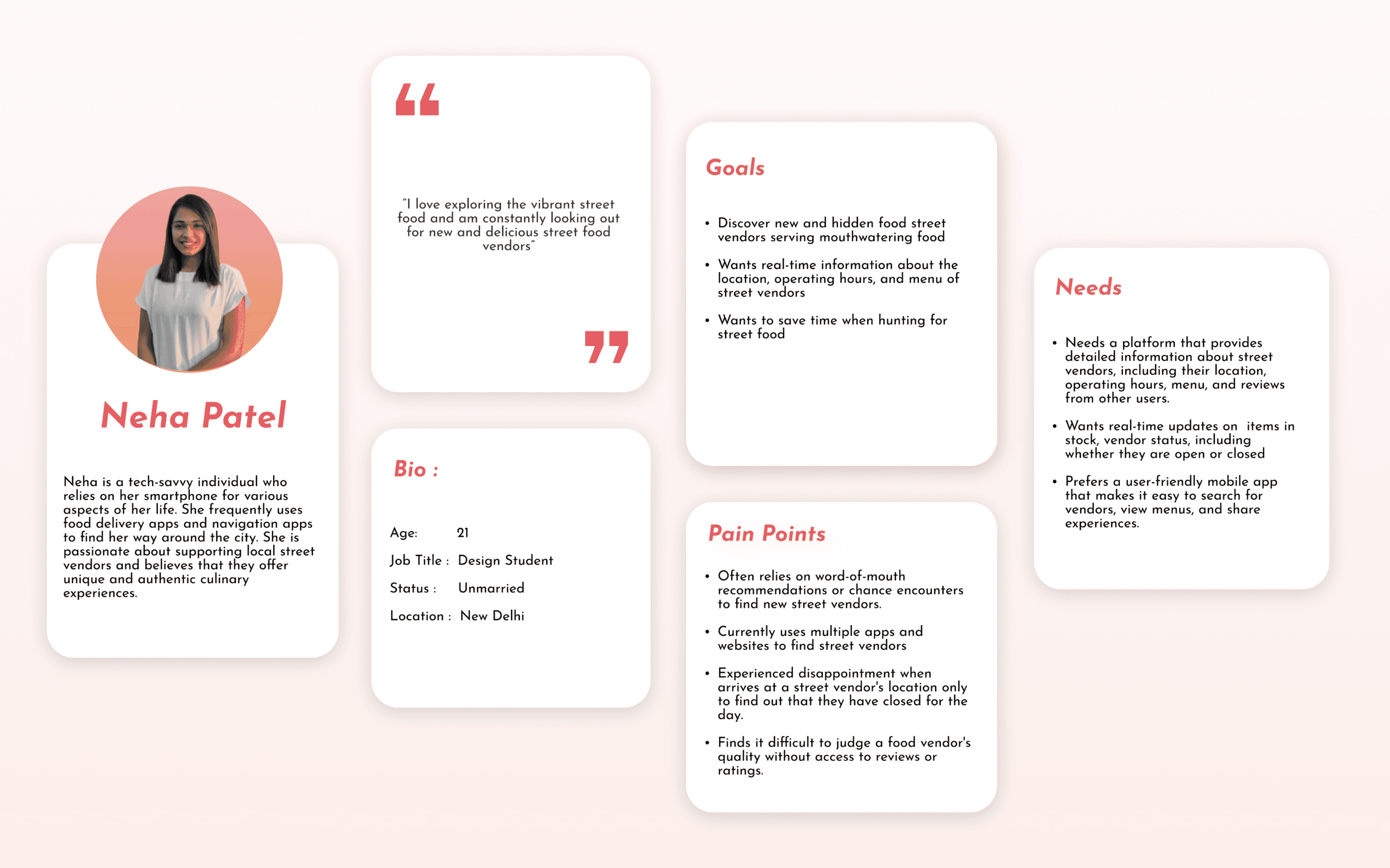
USER PERSONA
Define
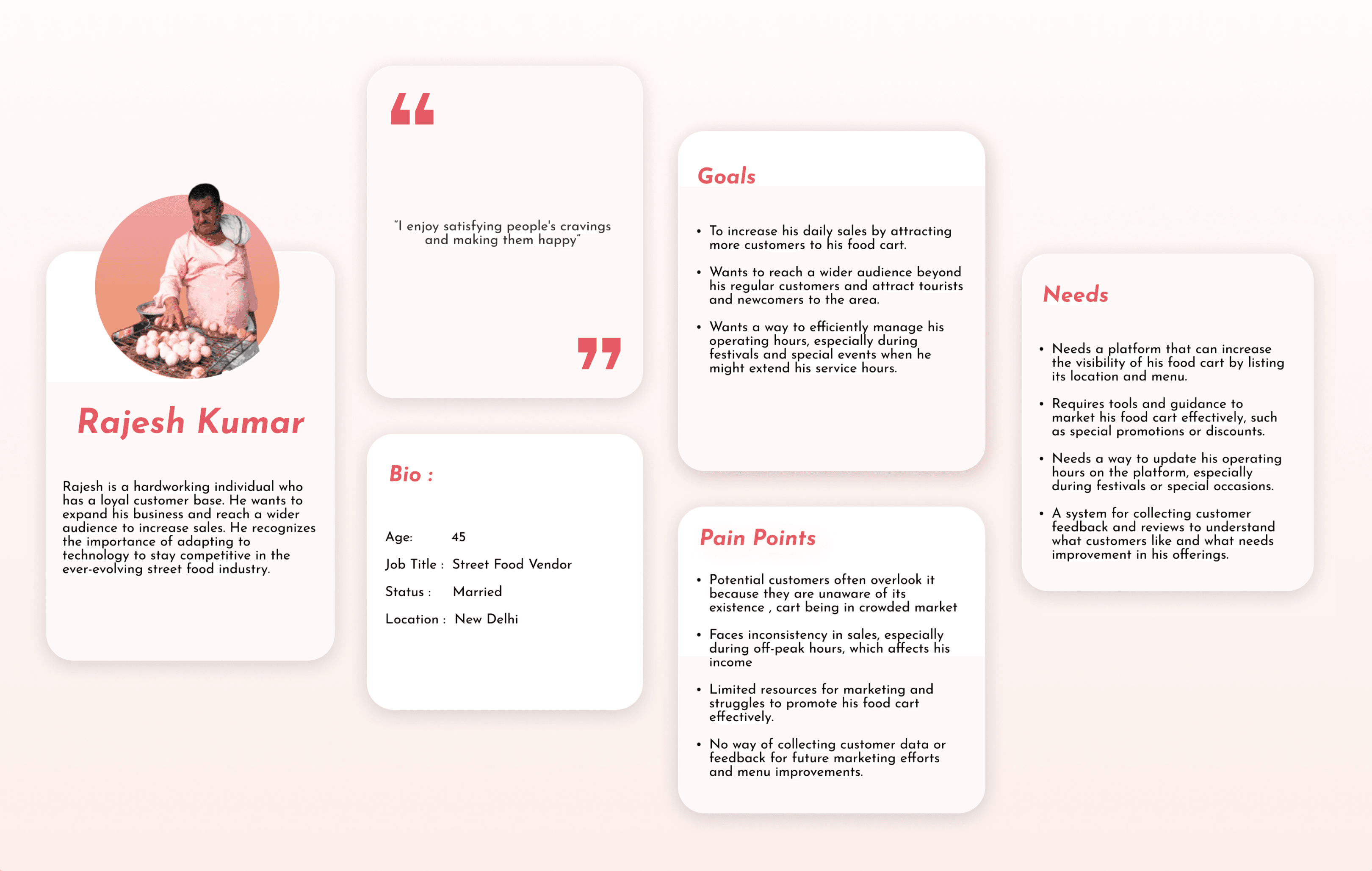
VENDOR’S PERSONA
USER EMPATHY MAP
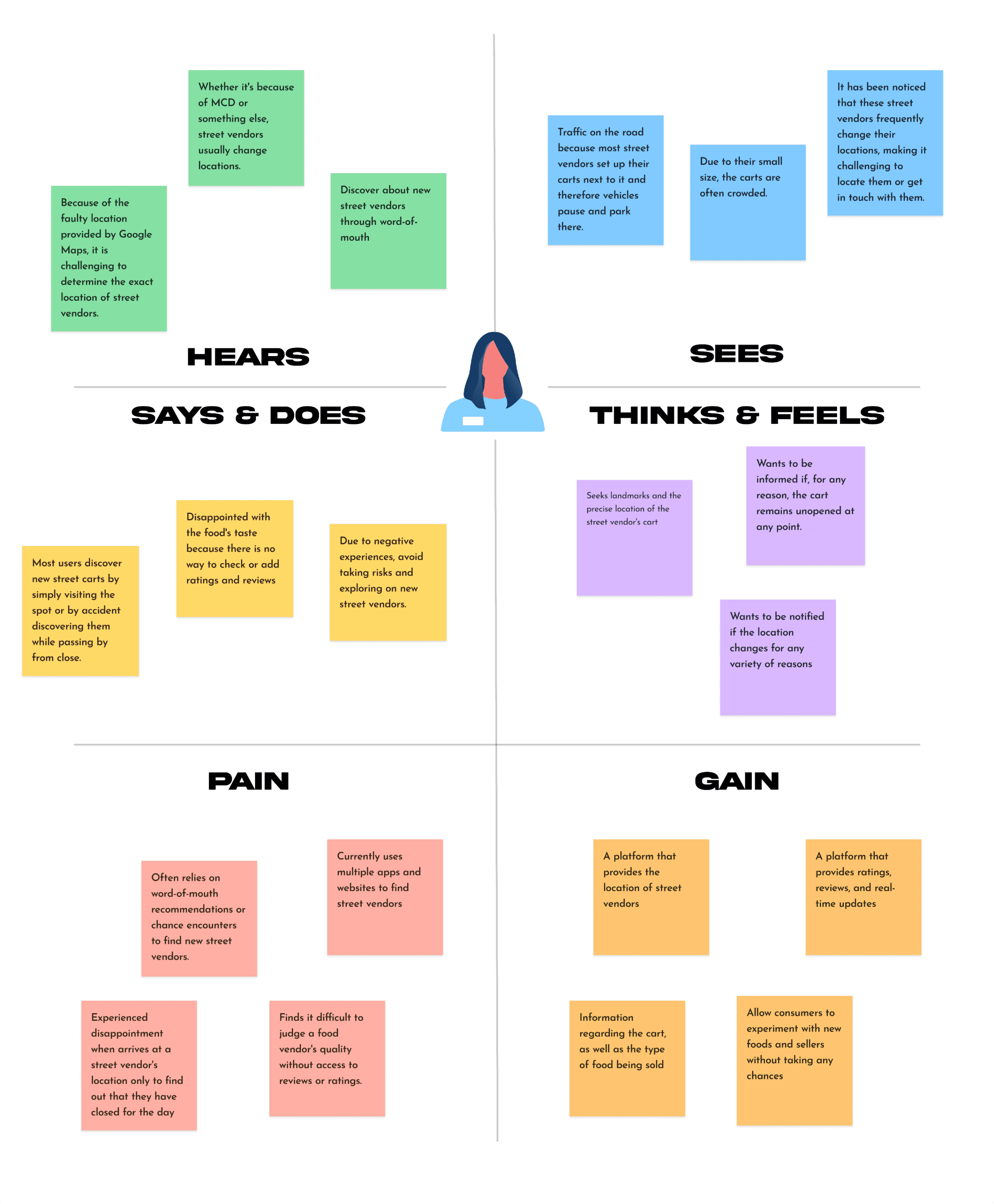
VENDOR’S EMPATHY MAP
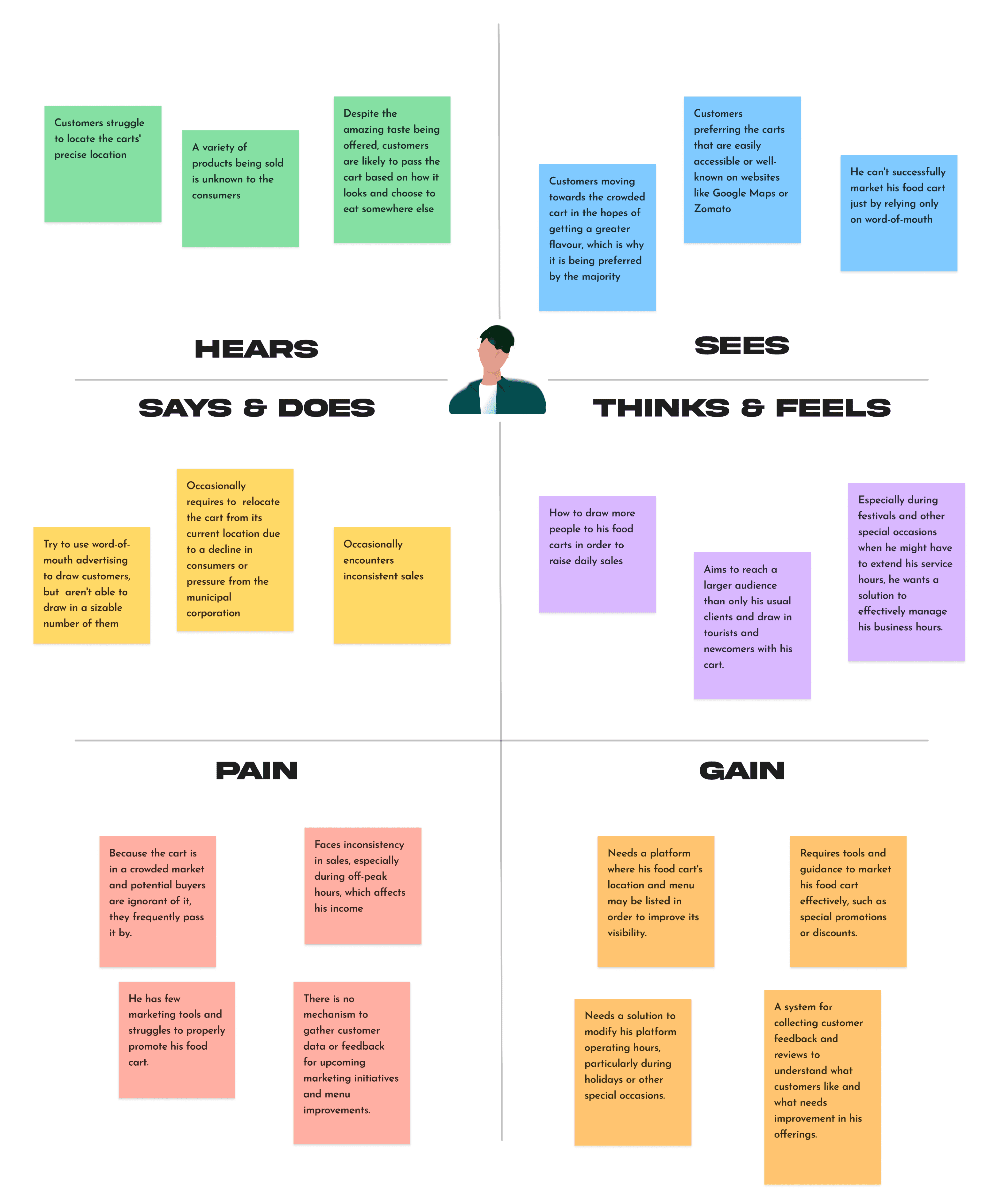
CUSTOMER JOURNEY MAP - USER
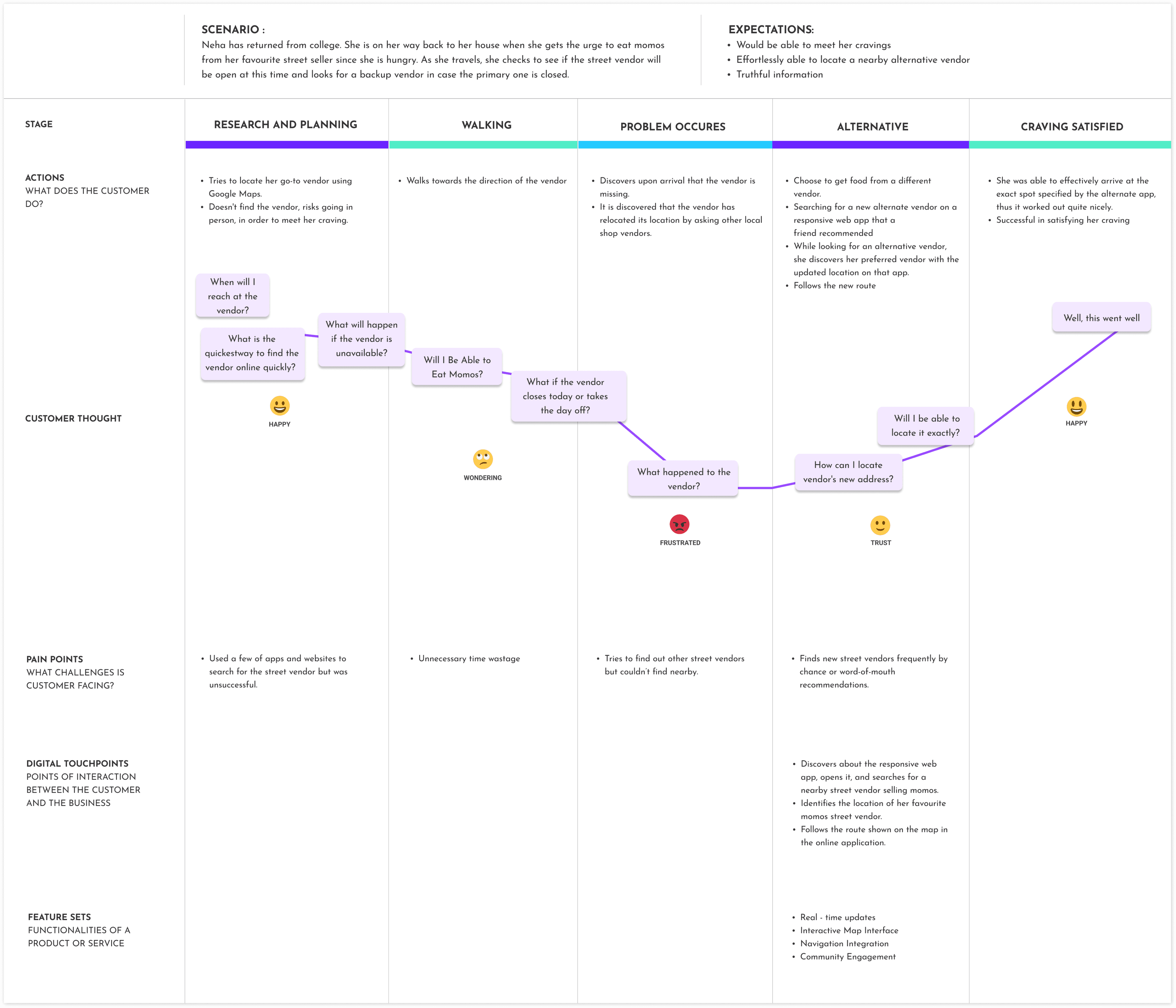
CUSTOMER JOURNEY MAP - VENDOR
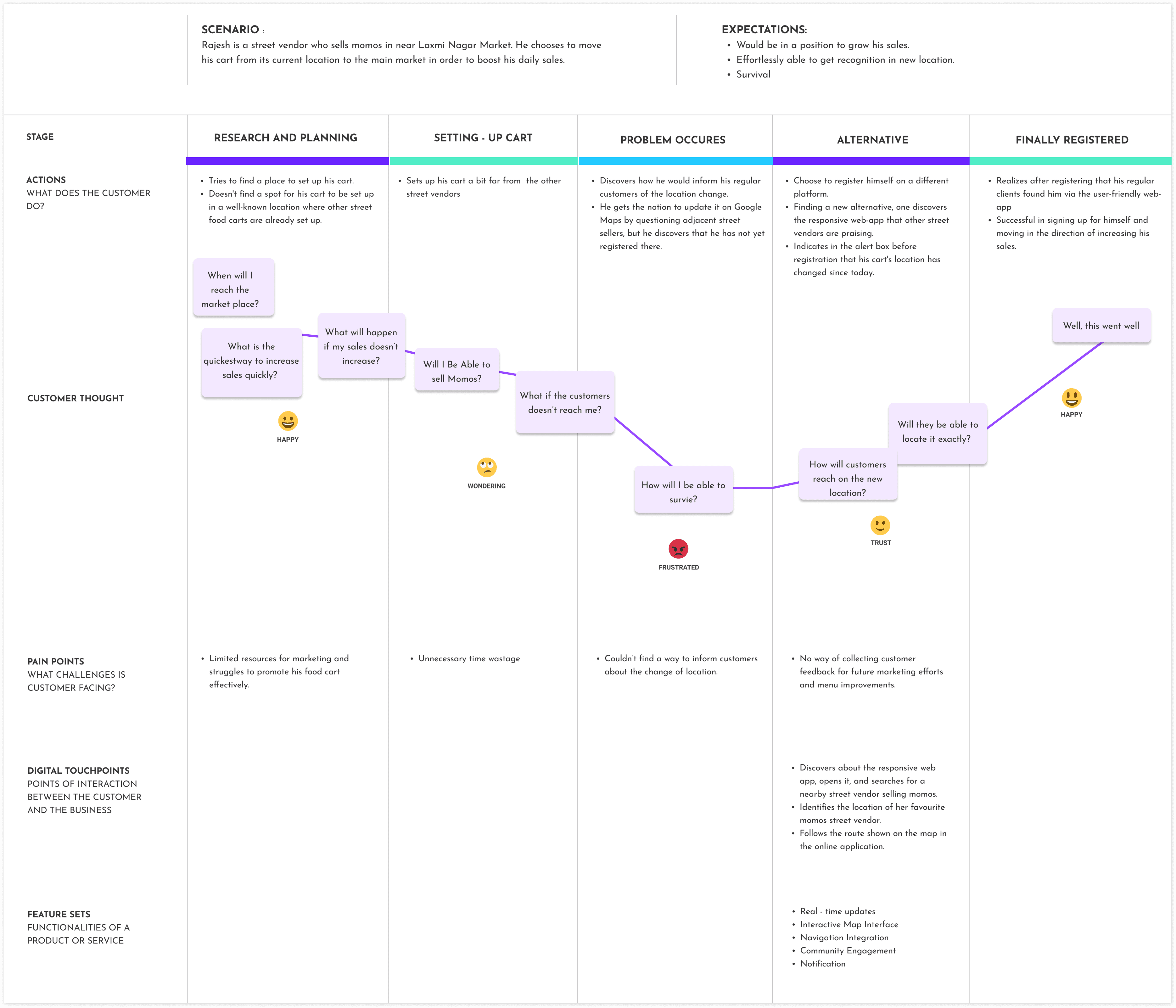
TARGET USERS


Offline Mode: Allow users to access basic vendor information and saved favorites even when they have limited or no internet connectivity.
Community Engagement: Foster a sense of community by allowing vendors to post updates, promotions, and events, connecting with their customer base.
Navigation Integration : Integrate with navigation apps to provide step-by-step directions to the vendor's location, making it easy for customers to reach them.
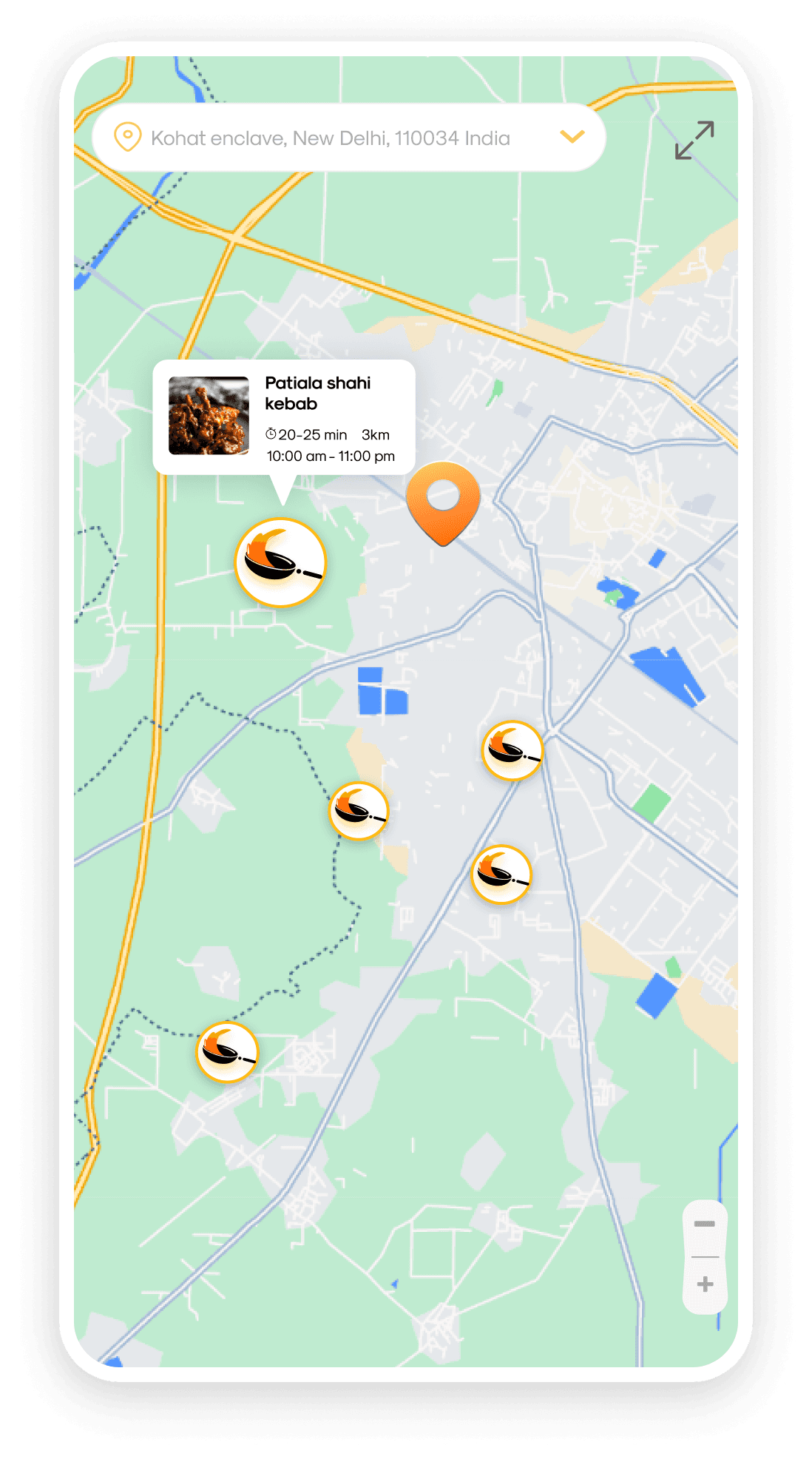
Interactive Map Interface: Offer a user-friendly map interface that displays the locations of street vendors, making it convenient for customers to locate their favorite vendors.
Real-Time Tracking : Provide real-time tracking of movable street vendors, allowing customers to know their current locations and estimated arrival times.
UNIQUE SELLING PRICE
Run online advertising campaigns: By maintaining an active presence on social networking sites such as Facebook, Instagram and others.
Print Advertisement: By affixing flyers to vendors' carts and informing customers that they may place pre-orders for food using our flexible web application (OR Code).
Product Packaging: Exciting and innovative packaging is something to remember a brand by
Influencer marketing: Collab with content creators
Email marketing: Collect email addresses when users signup & send offers and reminders on Email
MARKETING STRATEGY
Food Enthusiasts:
People who love trying different types of street food and want to explore new vendors and cuisines in their area.
Tourists:
Travelers looking for authentic local experiences by trying street food in a new city or country.
Office Workers and Students:
Individuals seeking convenient lunch options near their workplace or campus.
Families:
Parents looking for family-friendly street food vendors for casual outings and meals.
City Explorers:
Individuals who enjoy exploring their city or neighborhood and trying local street food as part of their adventures.
To effectively target these user groups, the web app should offer features and functionalities that cater to their specific needs and preferences. This may include filters for dietary restrictions, location-based services, reviews and ratings, real-time vendor tracking, and user-generated content to enhance the overall user experience.
Vendor Visibility: Enable vendors to update their locations easily, increasing their visibility to potential customers.
TASK FLOW
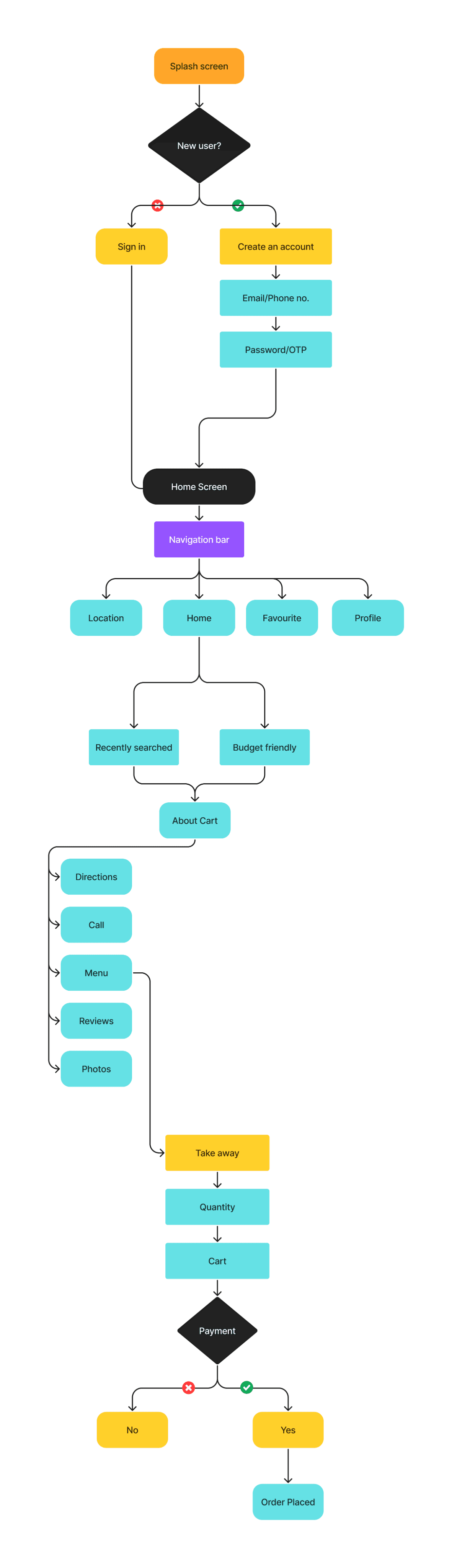
Business model
Subscription fee: The app could charge street vendors a monthly or annual fee of 100-350 rupees to be listed on the app.
Transaction fee: The app could charge a small fee of 5-10% on each transaction that takes place through the app. This would be a good way to generate revenue. However, it is important to keep the fee low enough so that it does not discourage customers from using the app.
Advertising: The app could sell advertising space to businesses that want to reach street vendors or their customers.

Inability in finding street food vendors

PROBLEM STATEMENT
INFORMATION ARCHITECTURE
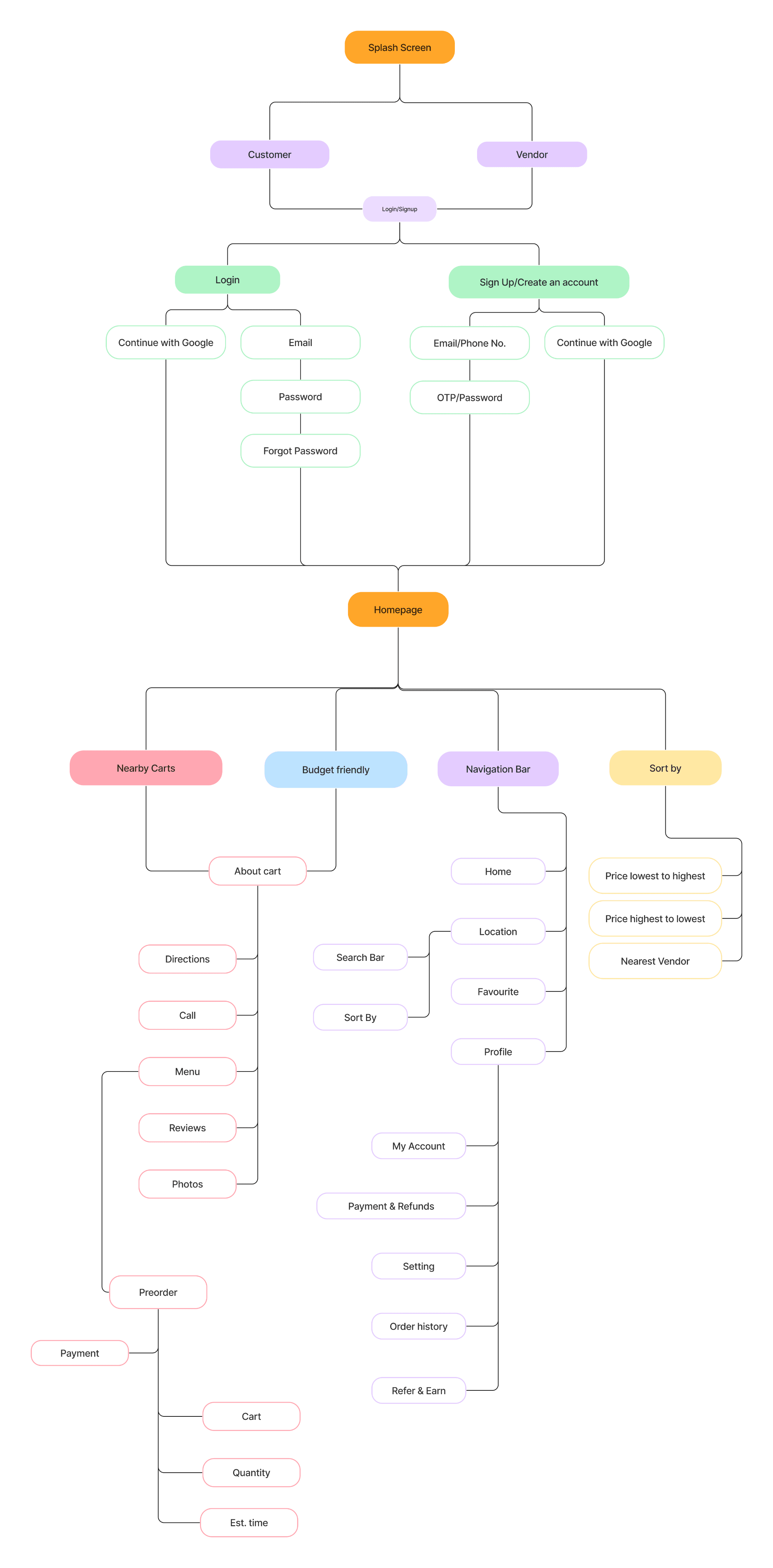
Design phase
Low fidelity mobile wireframes
I started by creating wireframes to visualise the app's layout and user interface. These wireframes were then used to create high-fidelity prototypes that demonstrated the app's functionality and design.
PAPER PROTOTYPE
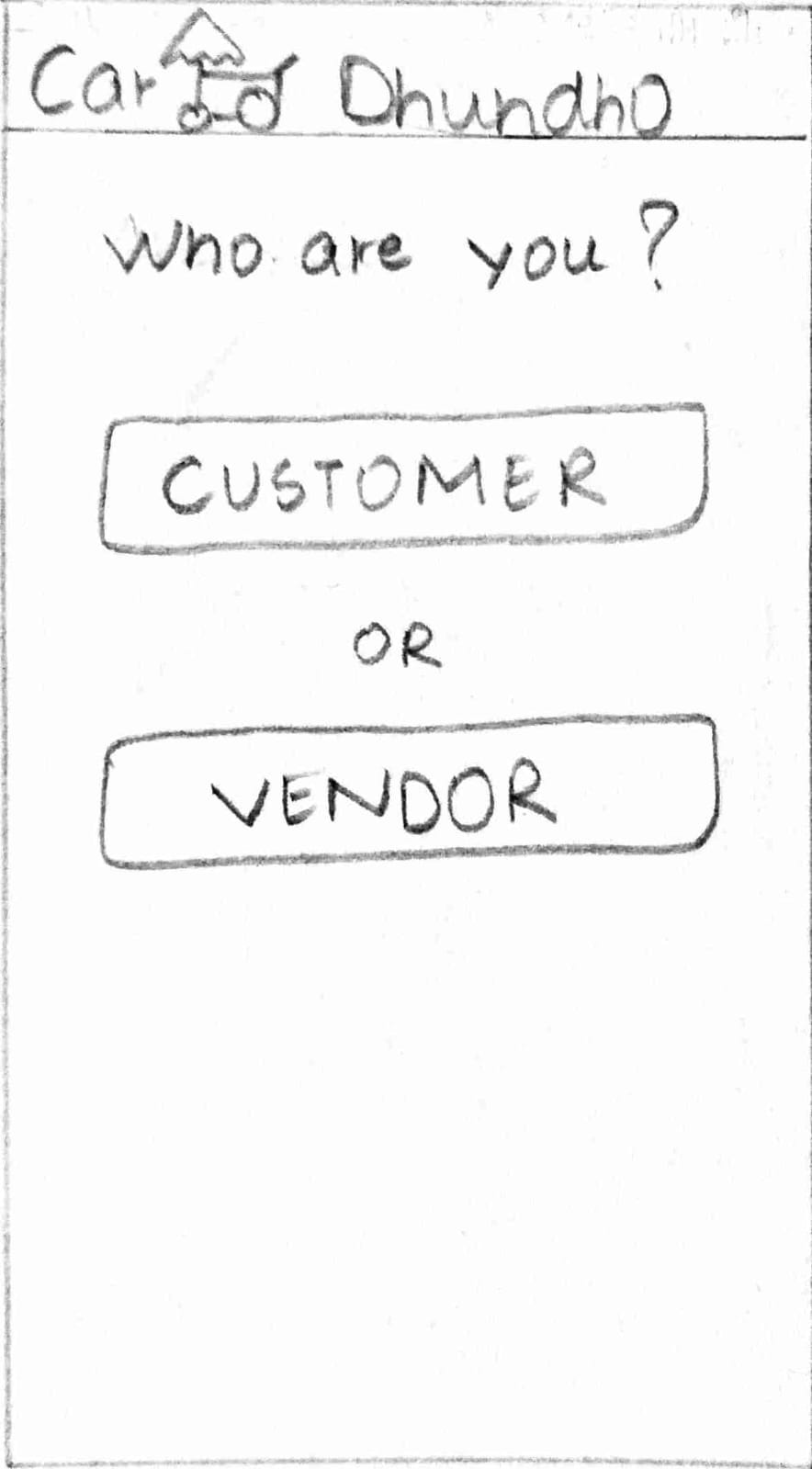
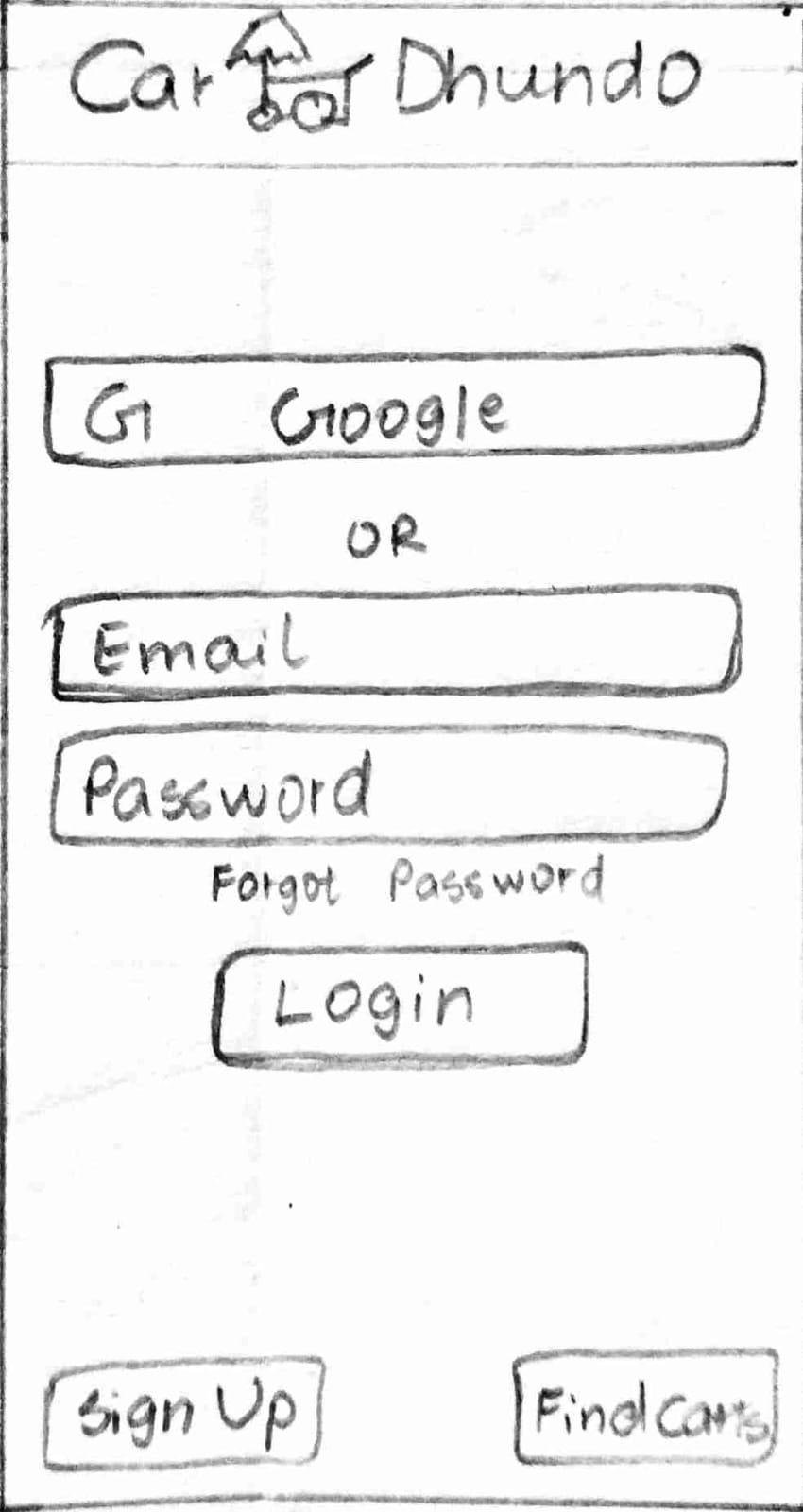
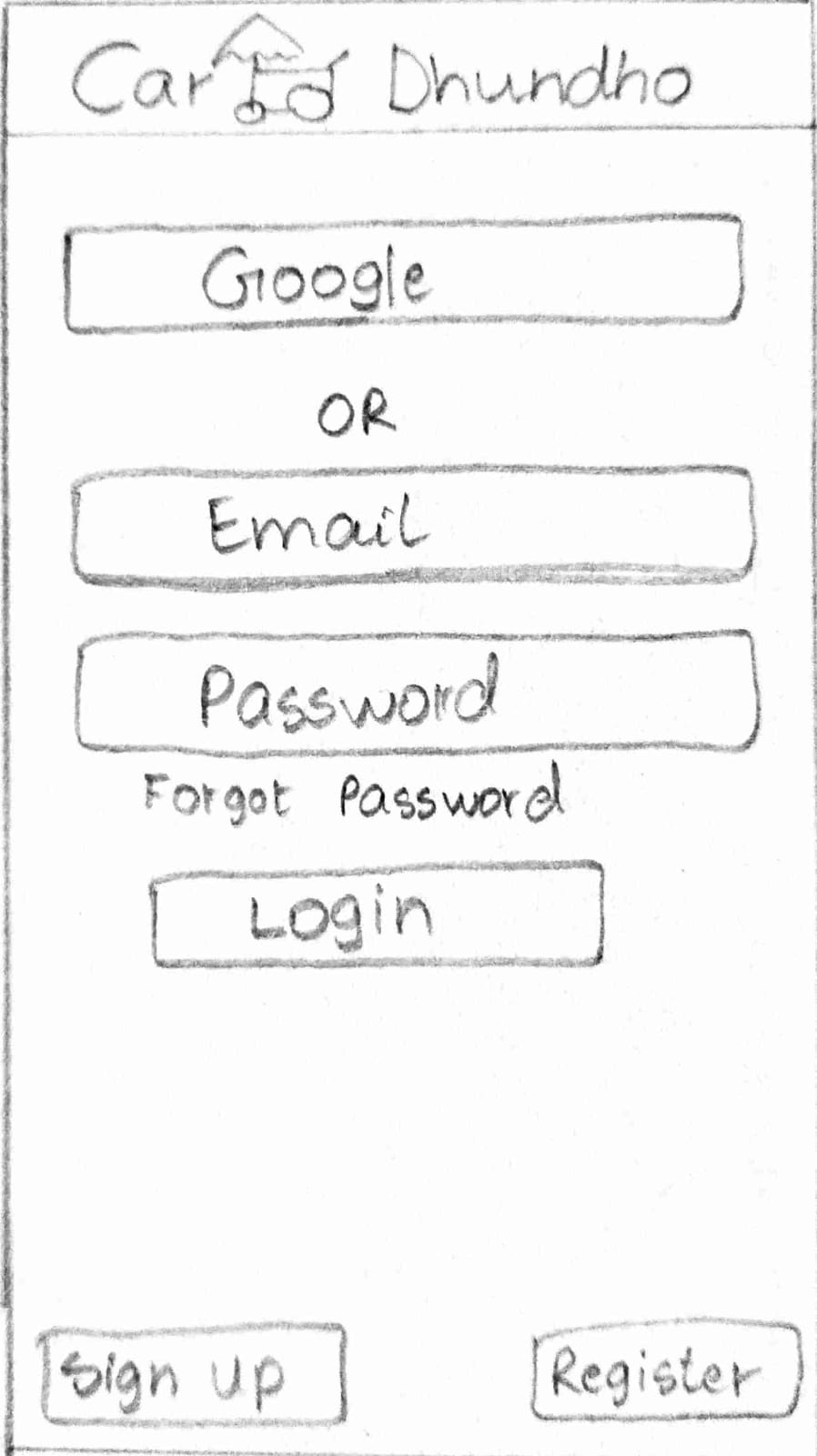
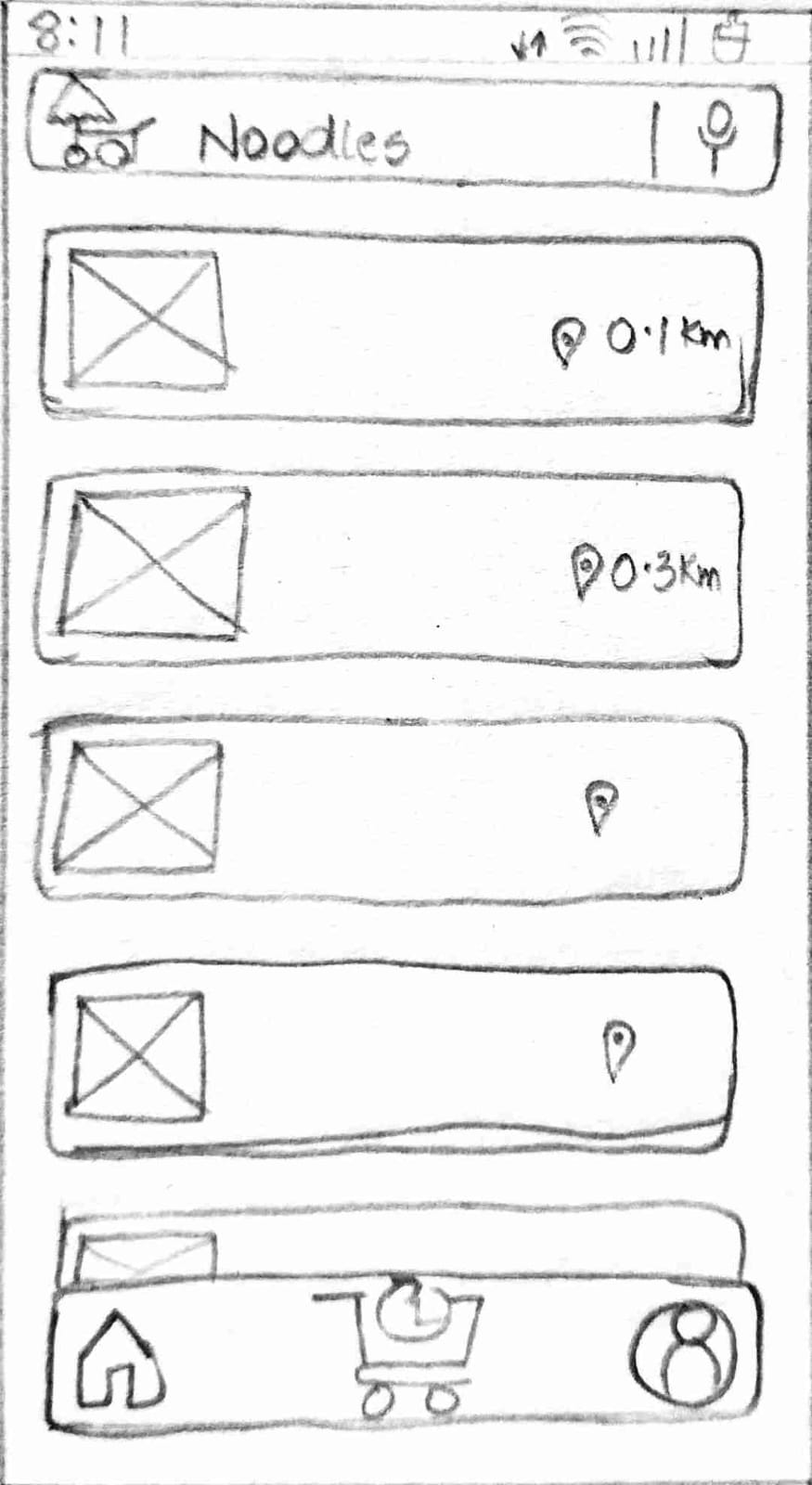
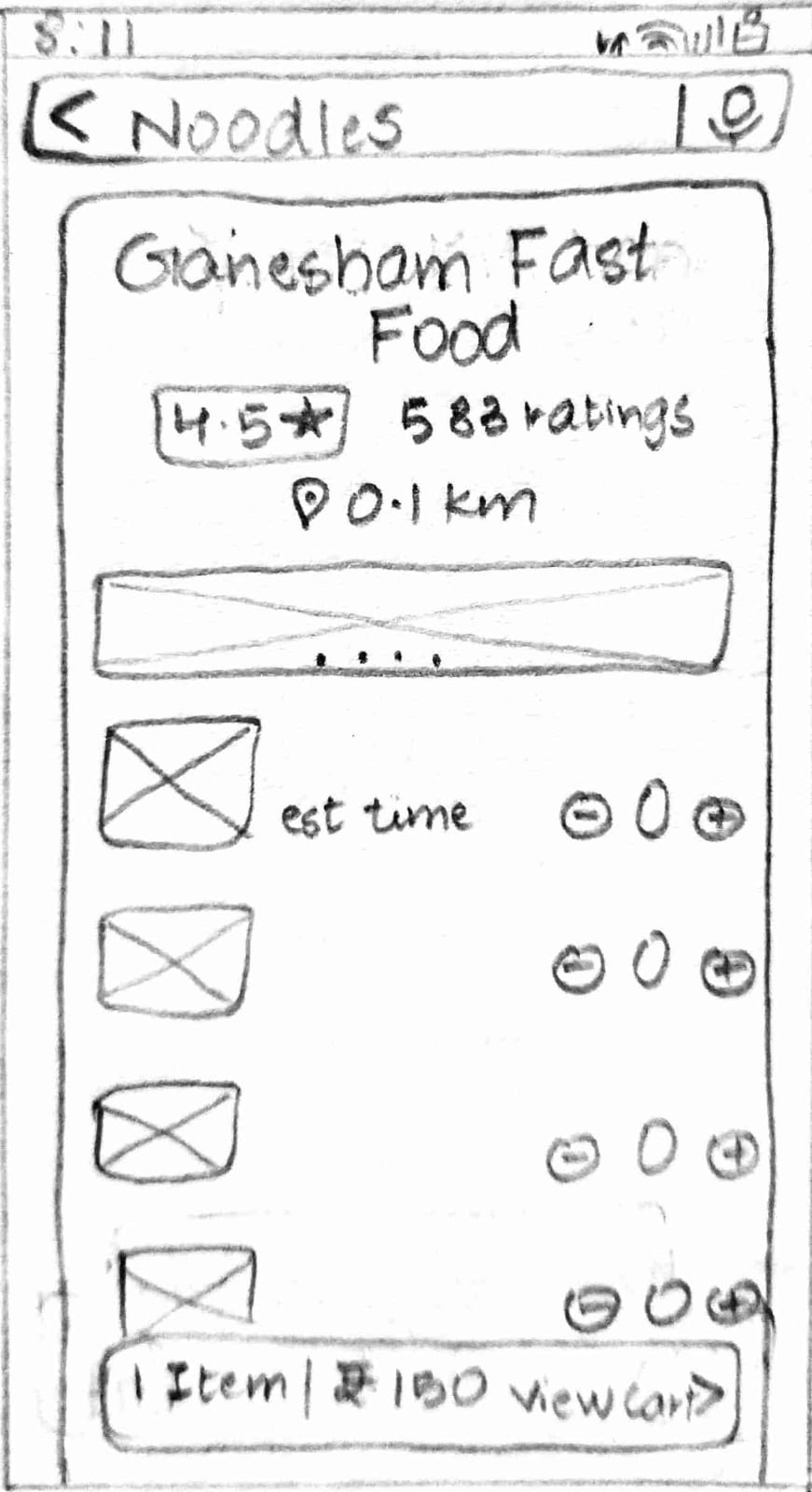
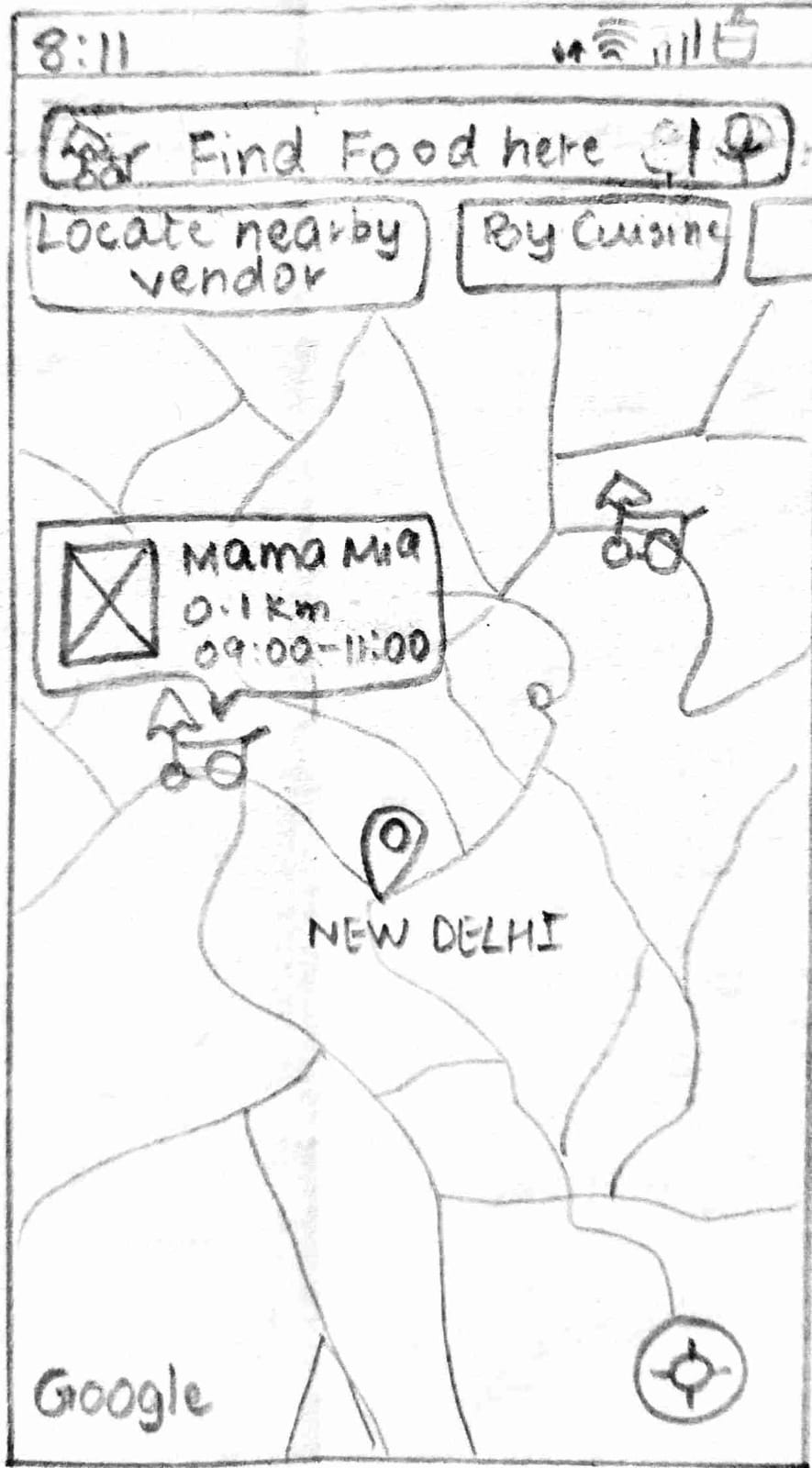
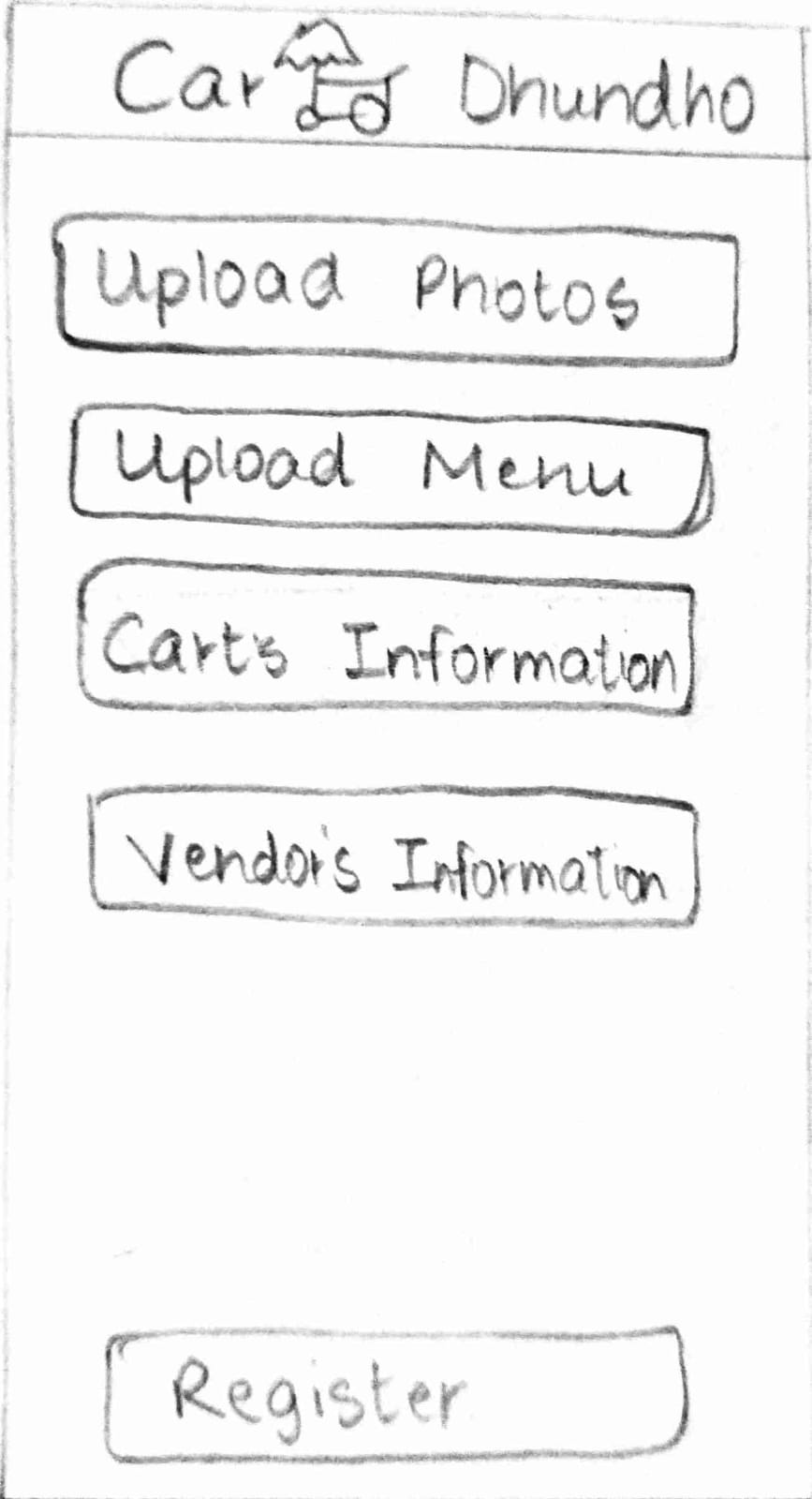
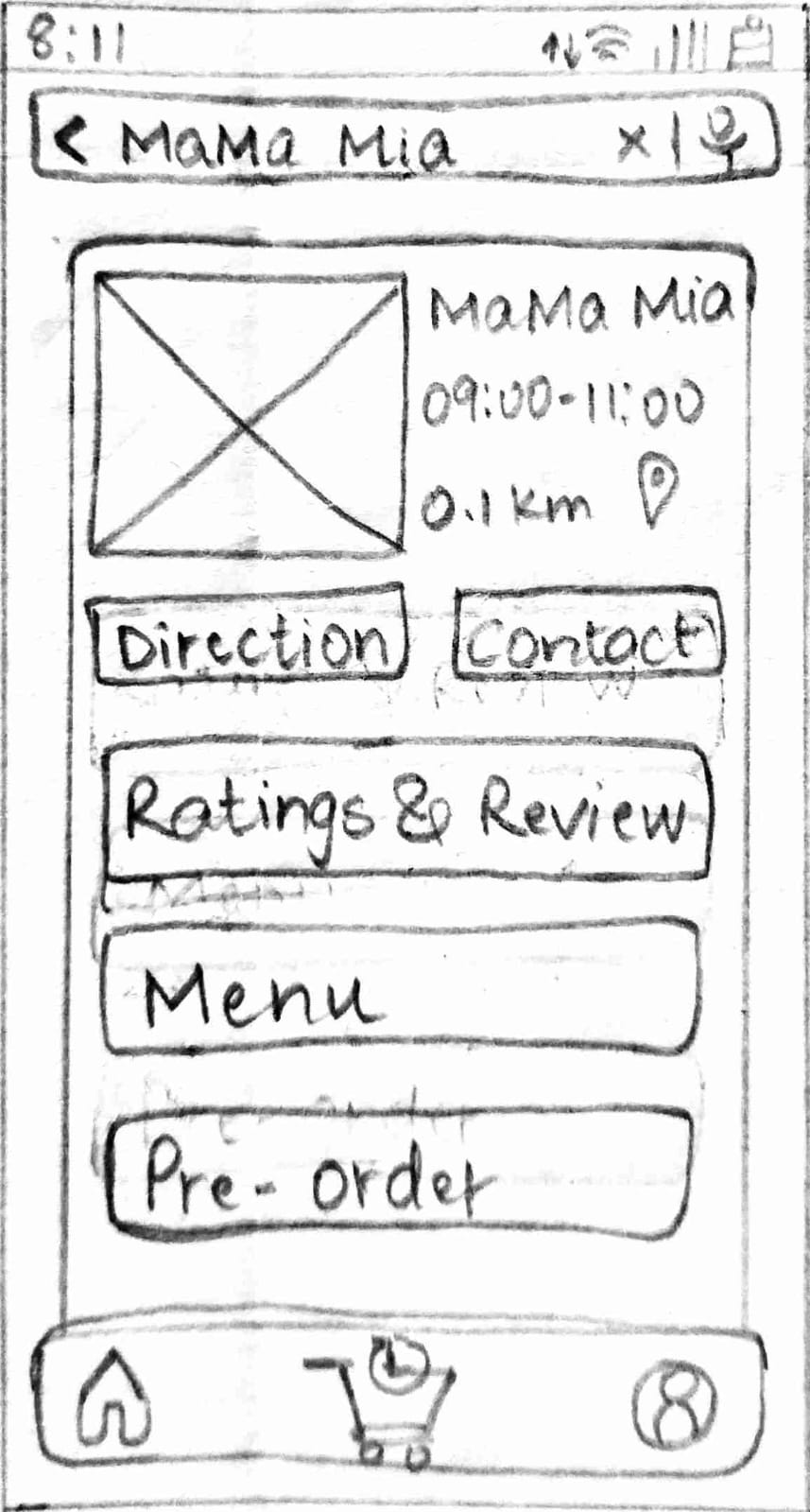
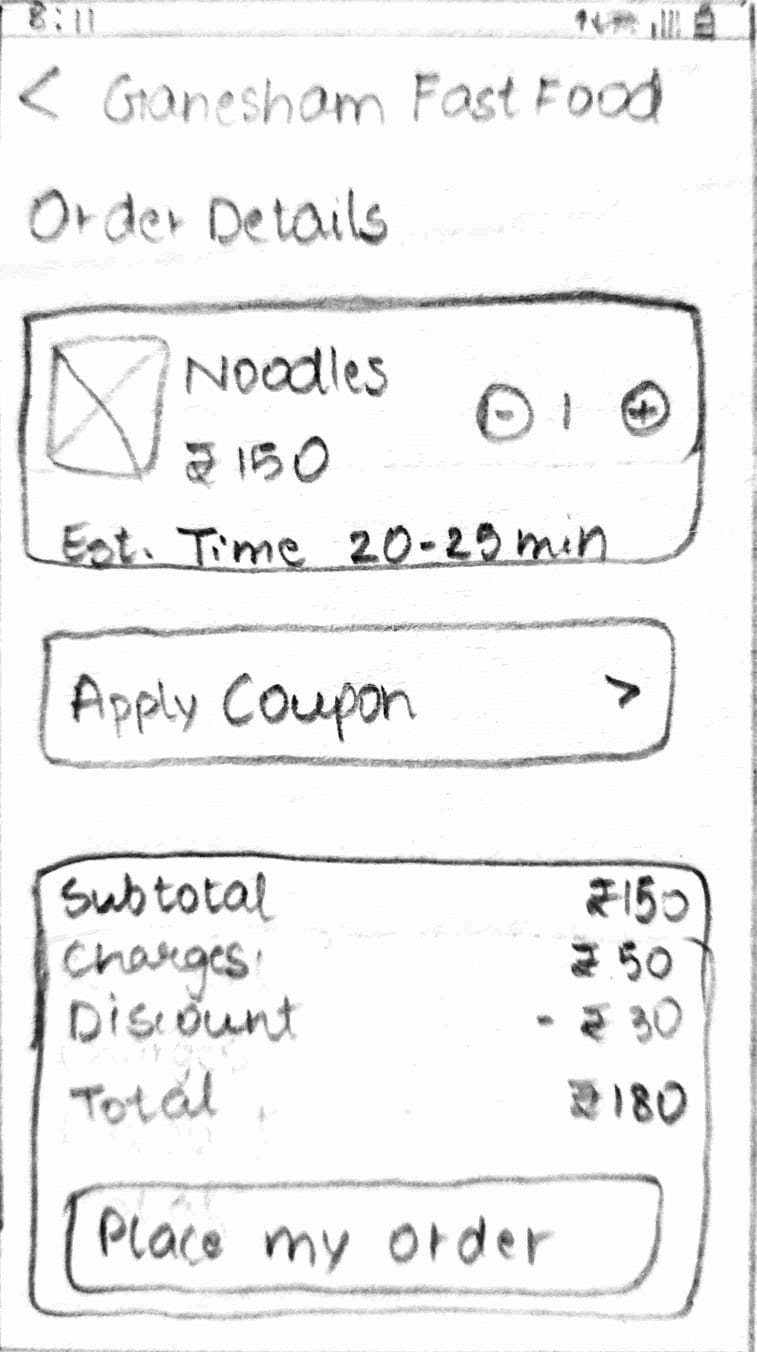
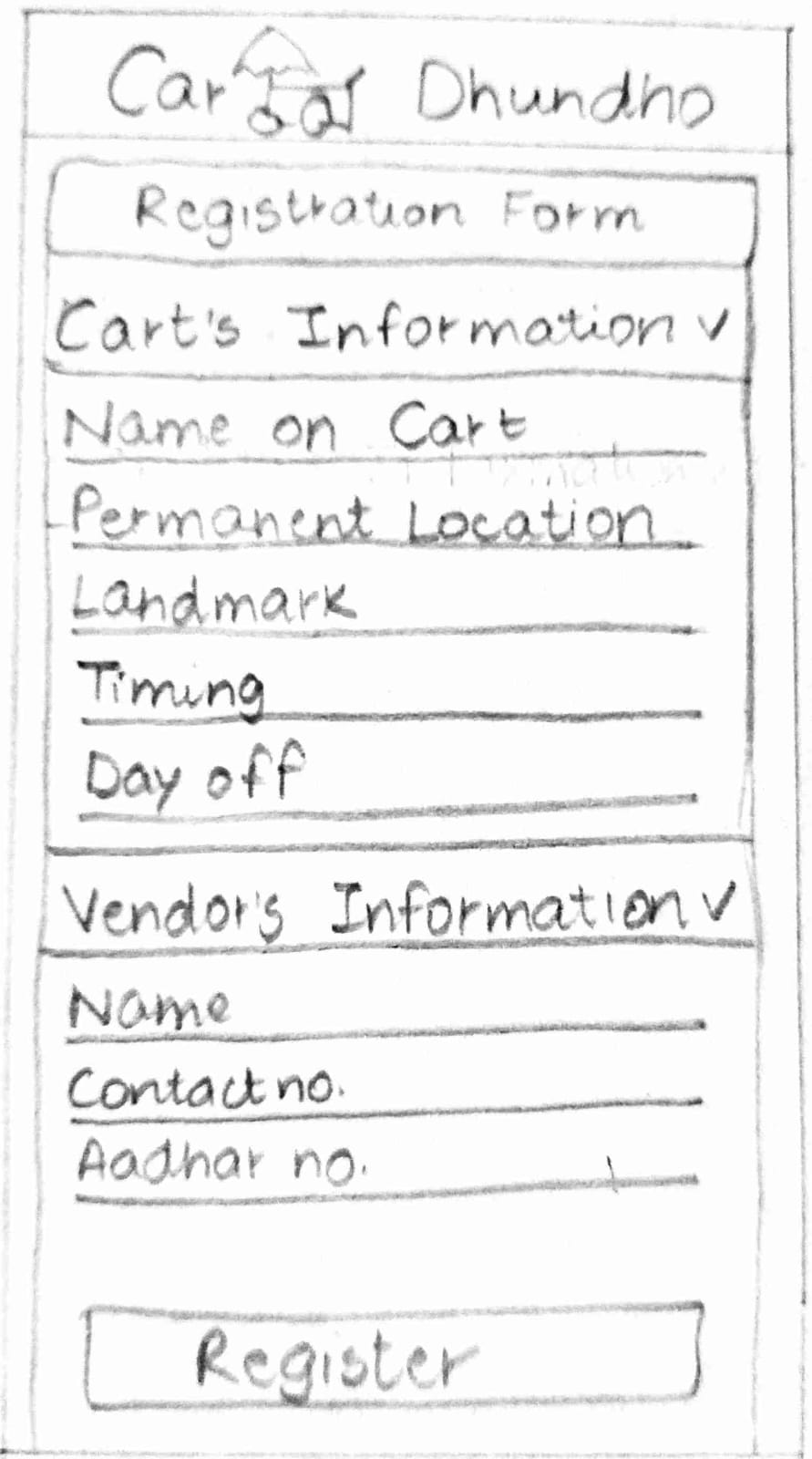
From the information architecture formed, I sketched out an initial design to guide the mobile app wireframe and after i was satisfied with the final sketch, this was the final result:







THANK YOU
FOR Viewing till the End

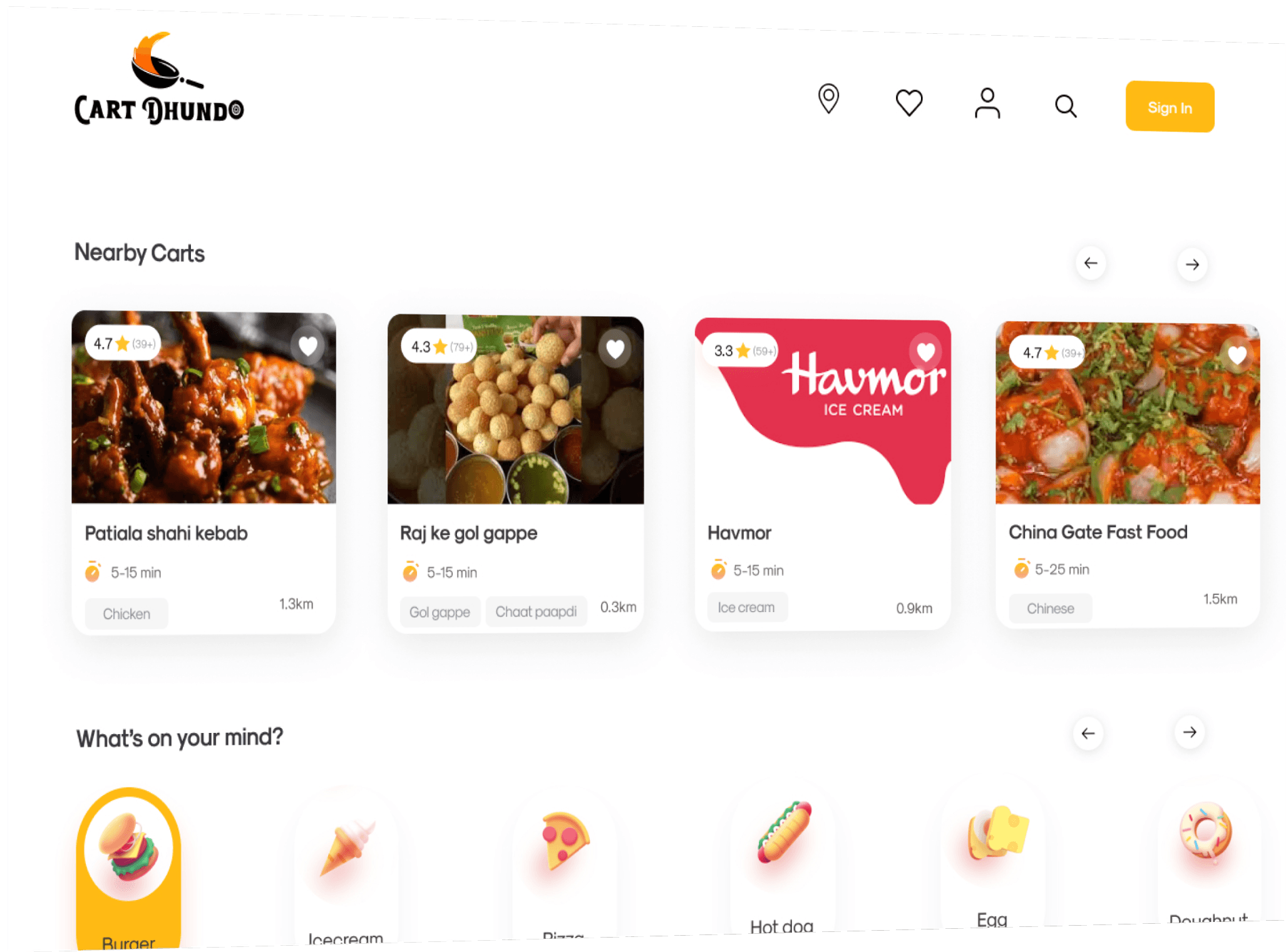
Omnichannel design is a customer-centric approach to providing a seamless and consistent experience across all channels, including websites, apps, and brick-and-mortar stores in this case carts
Personalized recommendations: Cart Dhundo use customer data to provide personalized recommendations for street food and vendors. This helps customers to discover new foods and carts that they might enjoy.
Real-time order tracking: Customers can track the status of their orders in real time on all of channels. This allows customers to know exactly when their food is prepared to be picked.
Cross-platform preordering: Customers can preorder food from Cart Dhundo using any of their channels, and their order will be processed seamlessly. For example, a customer can start browsing street food or vendors on the Cart Dhundo website and then switch to the app to place their preorder.
Omni channel


1
2
3
4
Unified customer accounts: Customers can create a single account that can be used across all of channels that is app and website. This allows customers to easily track their orders, manage their addresses, and access their saved favorites.
Usability testing
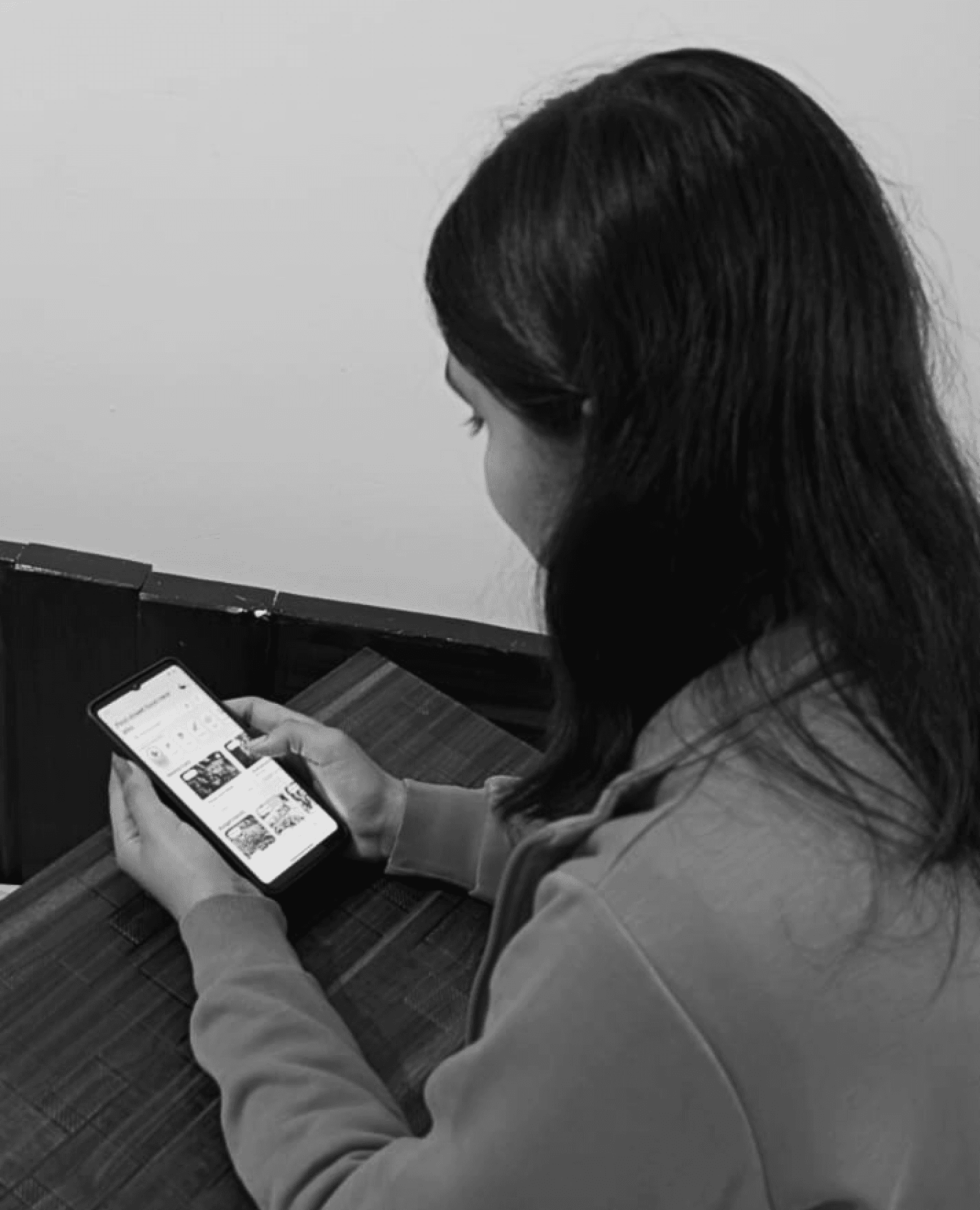
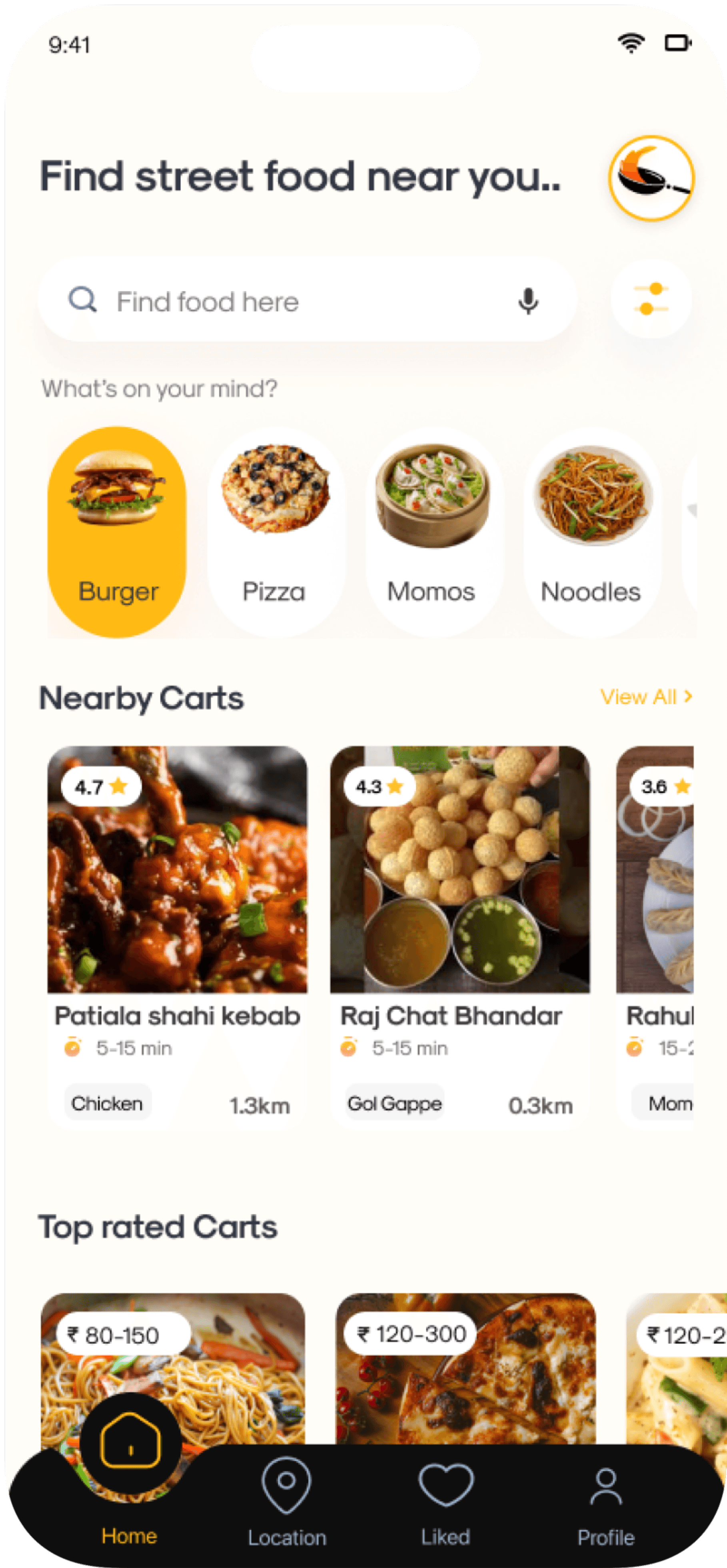
With the goal to test the existent flow and visual design I conducted usability testing with 2 participants
User tasks
What worked well
Login
Place order with a food item
Iterations were done later in the process
Intuitive navigation
Good visual layout
Buttons were easily clickable while testing
What needed improvement
Difference between vendor and customer signup
Navigation bar is bland
Success metrics
Time on task
Error rate
Task completion time
Participant 1
Participant 2
Run prototype






Dream
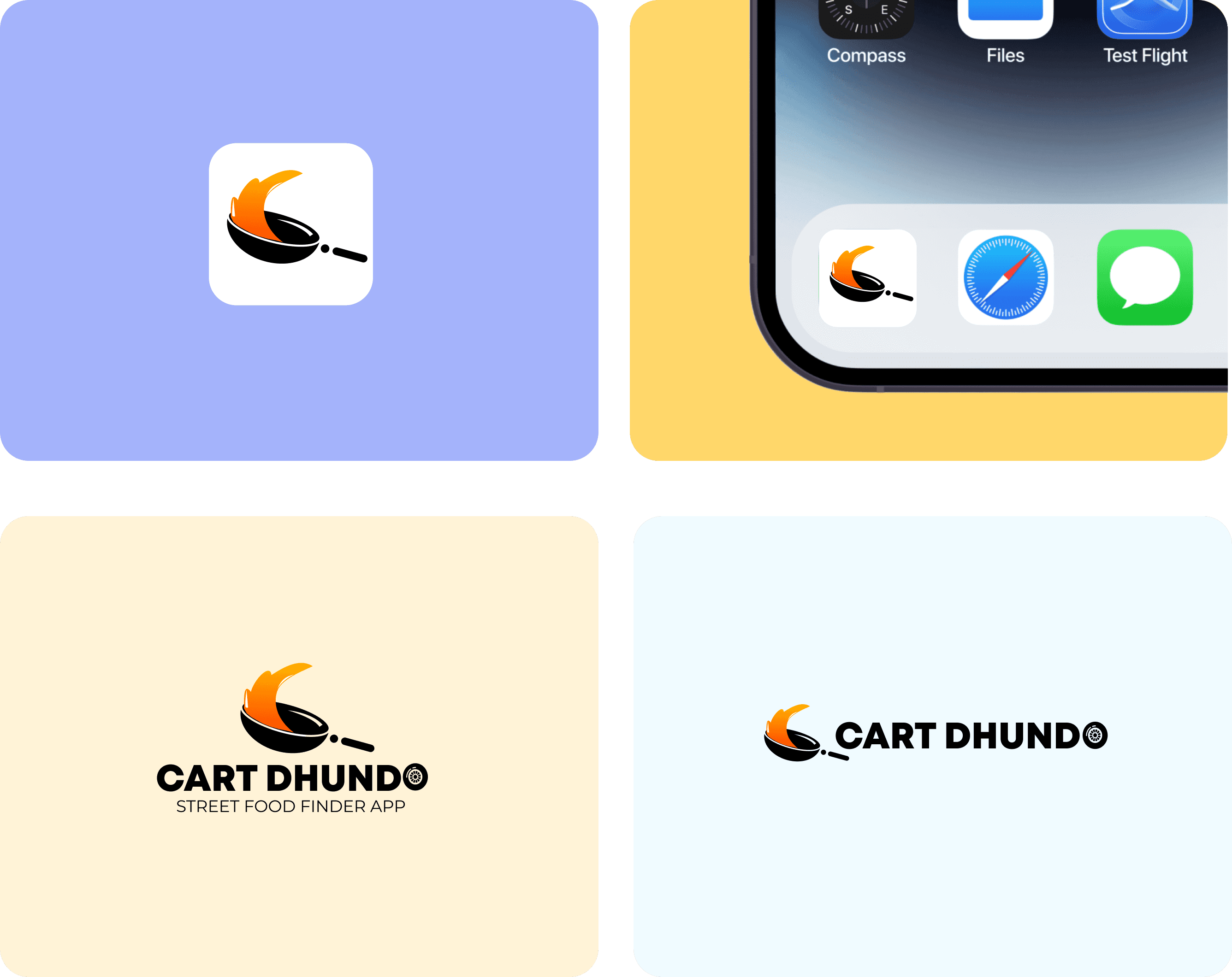
Style guide
Logo iterations
Final logo
Head 1
42/48 Semibold
Head 2
32/40 Semibold
Body large
16/24 px Medium
Small
12/16 px regular
Head 3
24/32 px Semibold
Title
18/24 px Medium
Body
14/18 px regular
Outline
10/14 px regular
Typography
Sk-Modernist
ABCDEFGHIJKLMNOPQRSTUVWXYZ
ABCDEFGHIJKLMNOPQRSTUVWXYZ
Unbounded
ABCDEFGHIJKLMNOPQRSTUVWXYZ
ABCDEFGHIJKLMNOPQRSTUVWXYZ
Aa
FFBB13
000000
CACACA
#FFFFFF
Colour palette
Layout
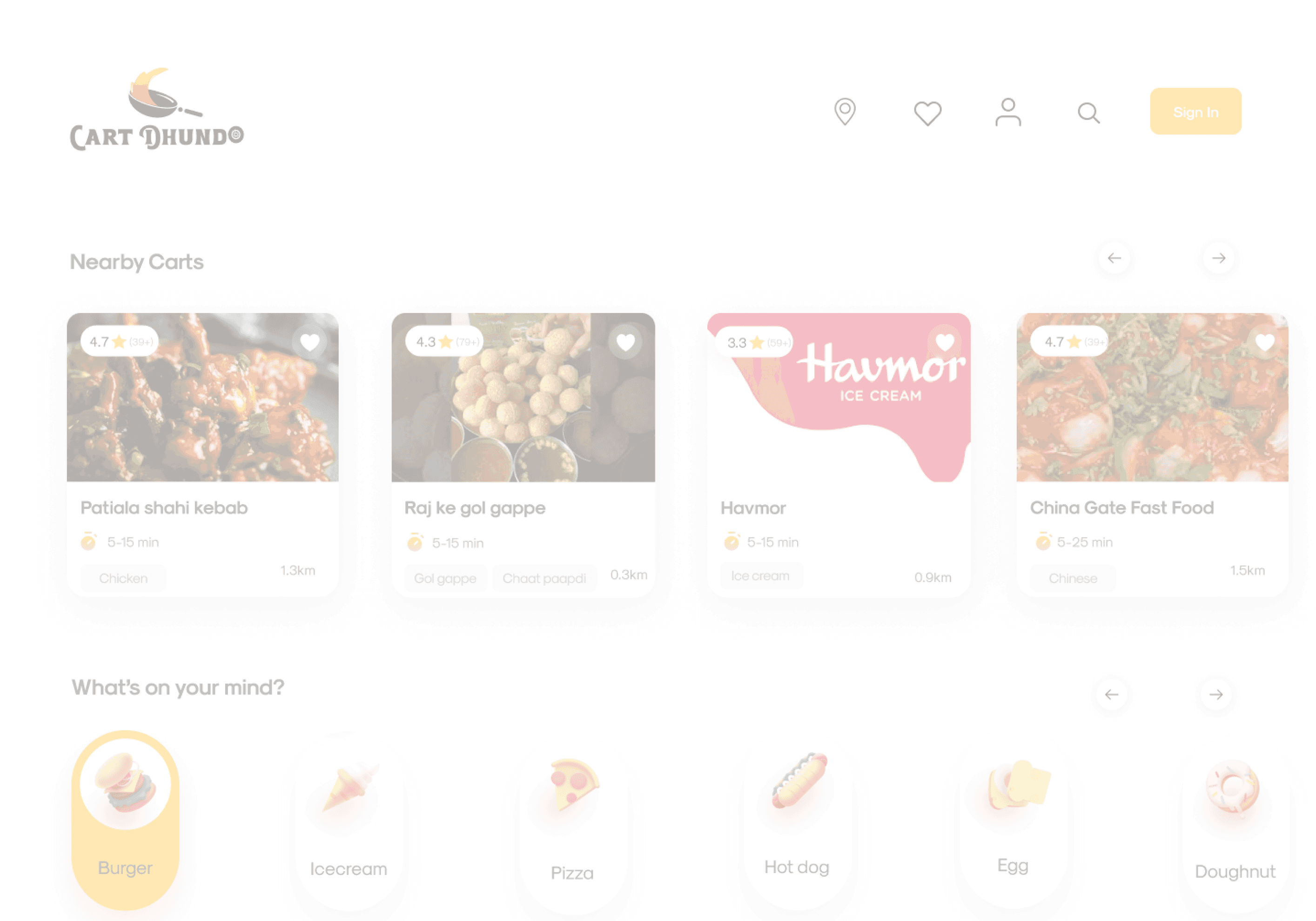
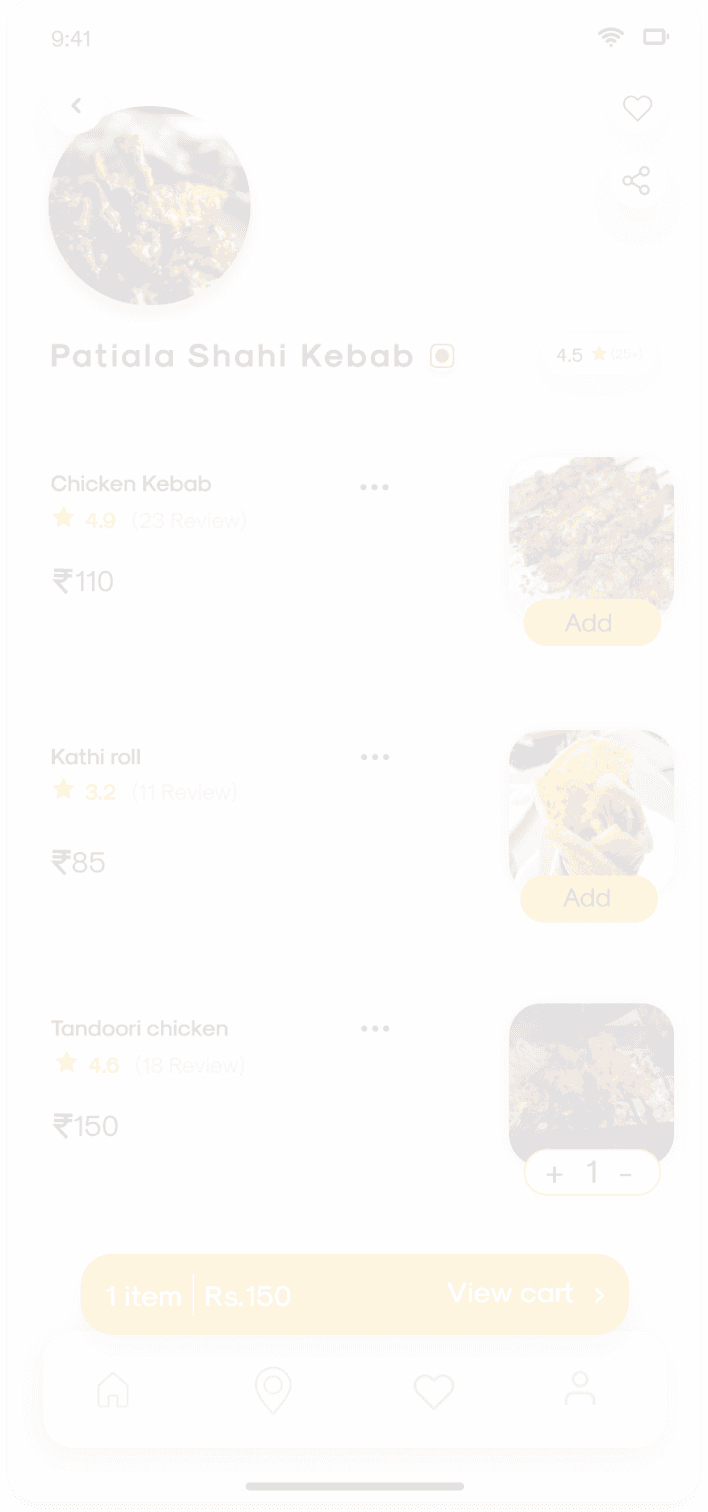
Gutter-16
Columns-4
Margin-16
Columns-4
Columns-12
Margin-20
Gutter-20
Mobile
Website

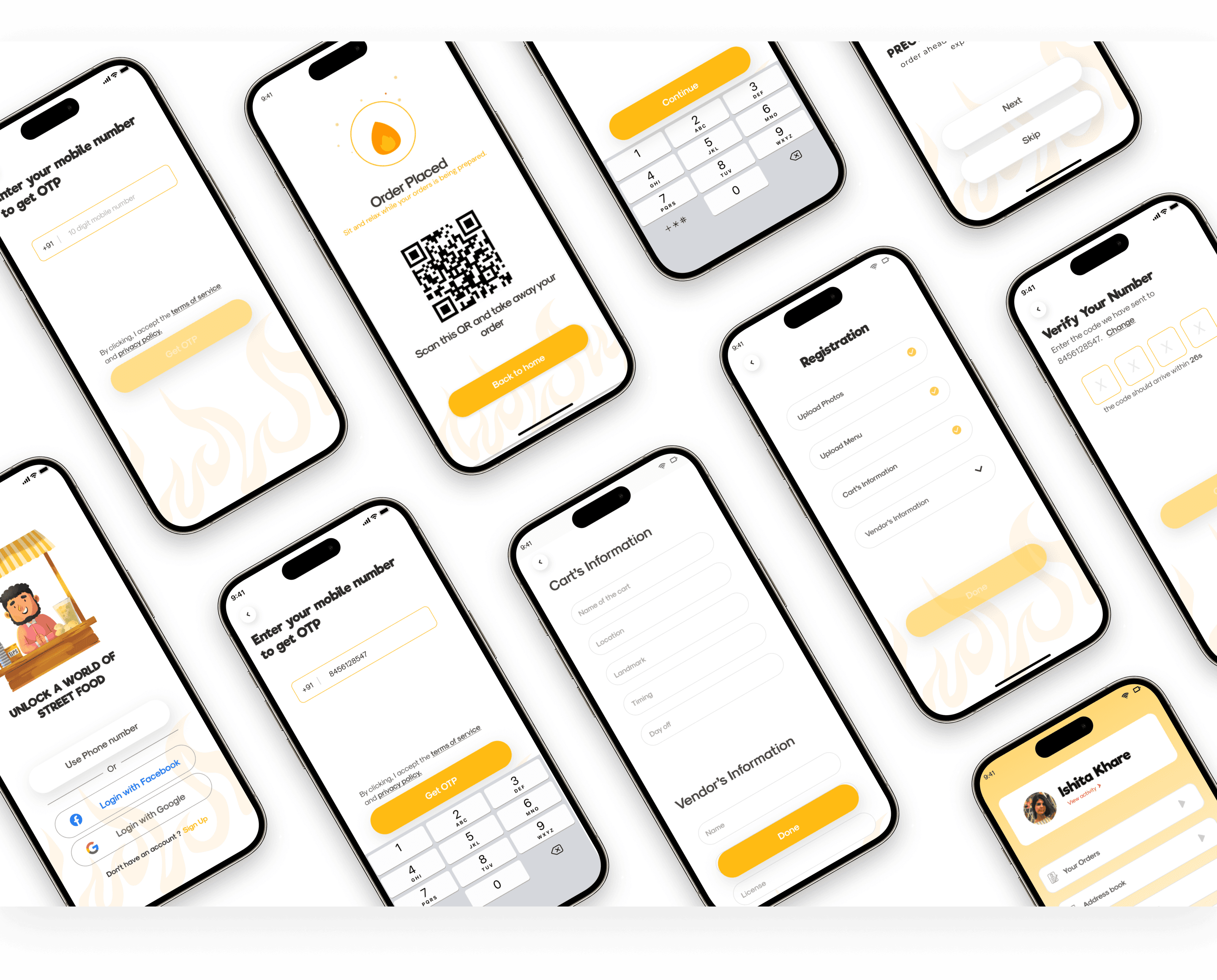
High fidelity wireframes
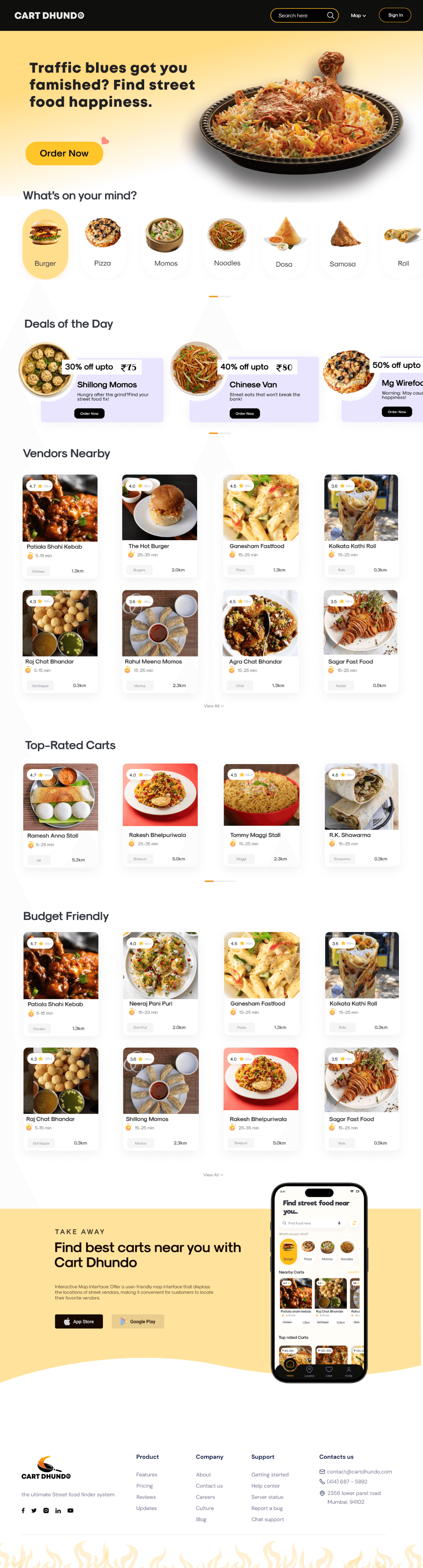
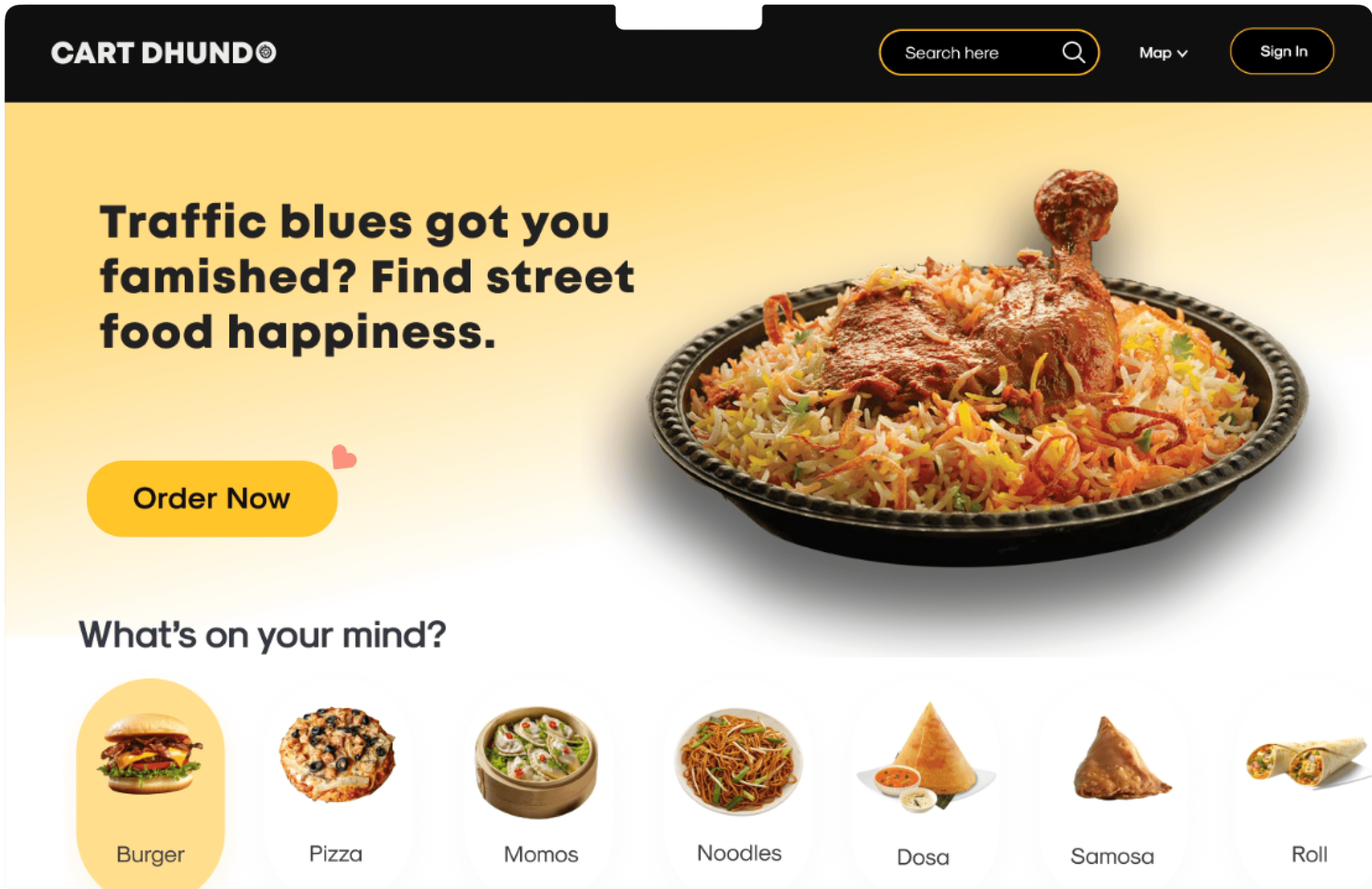
The next step was to design the HI-FI designs with referees to the wireframes of the app’s and website’s layout and functionality. The wireframes will outline the user flow, the various screens and features of the app, and how they all fit together.
Website Design